THE LAST FIFTH GRADE OF EMERSON ELEMENTARY

THE LAST FIFTH GRADE OF EMERSON ELEMENTARY
April 12, 2016

Saturday, June 4, 2011

Teaching Voice, Part Two

Open a children's novel and you'll know by the end of the first page whether the narrator hooks you or not. (For a great example, read the opening of Shiloh.)


Creating a narrative voice is a difficult skill to teach kids. There are elements to consider such as diction, tone, word choice. You could make yourself crazy with character-building worksheets.

When I'm working with school-age kids, jumping right in works better. I do some modeling (my full workshop description is here), the kids choose a photo or art-print featuring a person, and we get writing.

Yesterday, I posted two third grade poems. One was in the voice of Lady Gaga. The other described a girl caught in a fantasy phenomenon.

In honor of Saturday, when a lot of my students play sports, I'm sharing two poems in the voice of professional athletes.

There is a detail about the setting that Joey does not reveal until the end of his poem. Read "The Shot" and see how he times this information to add impact to the storyline.

The Shot
by Joey S.
Grade 3

I am watching if I make the shot or not.
I have a perfect release. I know it will spin a lot.
This shot is for the win for the  NBA championship.
If I make it, my team wins, or if I don't
I will let my team down.
I am terrified. I am not a great three
Point shooter. The crowd is roaring.
They hope I miss the shot in the end.
I make the shot and I silence the crowd.

Chase's poem vividly captures an athlete obsessed with winning. Listen for the rhythm and repeated phrases in this poem. Those elements build the voice of "The Boxer."

The Boxer
by Chase T.
Grade 3

I am warming up for my fight.
I put on my boxing gloves. 10 minutes until the fight.
I will practice and practice. I will not stop.
Two minutes left. I will win this thing. I will
Not back out. I will  not stop.
I will jump rope. I will punch a punching bag.
The fight is now. I will be fighting
The world’s best boxer. He won twenty
Medals in a row.
It is now. I will fight and fight until I
Win. I will  not stop until I win.
Maybe I win or I will lose. It is your
Choice. Do you think I will win or I will lose?
“He wins!”

More portrait poems coming soon, followed by a guest post with my high school intern, Alissa Bennett of St. Paul's School.

Friday, June 3, 2011

Poetry Friday: Teaching Voice


It happens at every writers' conference. An audience member asks the guest editor or agent what he looks for in a book. He says, "Voice."

"How would you define voice?" is the follow up question. Answers range from a succinct non-answer, "I know it when I hear it," to a rambling response while the agent squirms in her seat.

Voice is difficult to define, yet as readers we do have an ear for when a character's voice sounds true to itself.

Voice is also part of the 6+1 Writing Traits curriculum. So how do you teach it?

This school year, I brought back a lesson in portrait poems, using fine art images and magazine clippings for inspiration. The full portrait poem lesson is here.

Since I last posted the lesson, I've used PF blogger Amy LV's "Face Poem" as an additional model. 

The students get really into it! First, we look at an image and talk about the facts we see. Next, we spend time imagining -- what's this person's story. (One of my Northfield third grade classes imagined that the grandfather in Amy's picture was a time traveler and the baby he held was himself.) Last, we read and discuss the accompanying poem.

When it's time to write, we follow the same steps. Facts first, then imagination. I can't explain why it works, but it does.

My intern from St. Paul's School for Girls, (hi, Alissa!) and I were whispering about the poem, "A Quote from Gaga" in the back of the classroom. How does a third grader step outside of her own experience and write in the voice of a superstar?

A Quote from Gaga 
by Madi M.
Grade 3

Stylist! Stylist!
Where are you?!
I need a new outfit
For my photo shoot.
I need you to shop
‘Til you drop!
I need a new motorcycle
As a prop.
I need bright red lipstick
and shiny black kicks.
I need long black gloves,
And please, no doves.
My hair needs to be teased
And I need stockings to cover my knees.
The table is out of forks
And I need my black shorts.
I need my hair dyed
And none of this will be denied.
Did you just say, “No?”
Well!
You’re not invited to my show!
Hah!

Mackenzie brought an unusual image with her. The opening lines describe the magazine clipping she used. Then, the poem led Mackenzie into a fantasy scenario.  What an imagination. This poem is written in third person (both first and third were options for the portrait poems).

Untitled
by Mackenzie D.
Grade 3

Putting her hand in a green
glowing ball, wanting to have done
this all her life.
Touching it, feeling a hard
but soft thing, making the whole thing glow.
The light shining down
making the ball brighter.
Lines seem to burst out, but
go back in.
Sparks shooting out like a fire.
Her shirt’s already green, but it
seems as if the glow makes it greener.
Everyone crowding around her now,
wanting to do the same.
She gets bigger and bigger as
she takes her hand out,
then she gets smaller.

I will post more portrait poems over the next few days. Thanks again to Northfield Elementary and its families for giving me permission to share the students' amazing work.

Thursday, June 2, 2011

Make Believe As Metaphor

Most of my posts are about poetry, so you may not know that I am a huge SF/F buff.

It started early, with my family watching Star Trek re-runs in the 1970s.


My father -- who saw himself in Captain James T. Kirk -- took us kids to see Star Wars on Mother's Day, 1977, hoping for shorter lines and some quiet time for my mom and new baby brother.


Dozens of classic (and "new classic") SF/F novels later, I can tell you what I love about the genre. It's all about the metaphor.

Ursula K. LeGuin's Left Hand of Darkness -- on my re-reading list -- used alien/human relationships to explore xenophobia, and homophobia.

A new dystopian YA novel, Matched by Ally Condie, looks at a society where statistics have become the basis for everything from your job to your life-partner. (Read a review here.) "The Society" even tracks the games teenagers play, gleaning information that will help match them with the optimal job and person. These are the same techniques that businesses use today to track our buying habits and target advertisements at potential customers.


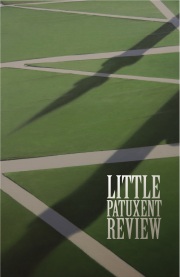
Little Patuxent Review's Make Believe issue, which comes out this month, features an essay on make believe and why fantasy films and literature are both popular and important. The essay is by Vonnie Winslow Crist, whom I've blogged about before.

Stop by LPR to check out my preview of Vonnie's essay, find out why the CDC wants us to be prepared for zombies, and read a review of Vonnie's new book, The Greener Forest.


You can find LPR on Facebook (please "like" us!) or subscribe to the journal through our website, www.littlepatuxentreview.org.