THE LAST FIFTH GRADE OF EMERSON ELEMENTARY

THE LAST FIFTH GRADE OF EMERSON ELEMENTARY
April 12, 2016
Showing posts with label children's poetry. Show all posts

Thursday, March 19, 2015

But Is It Poetry?: Talking Rhyming Picture Books with Laura Gehl

Happy Poetry Friday, everyone!


This week's host is Catherine
at Reading to the Core.
Today, I am guest-posting for Michelle Heidenrich Barnes at Today's Little Ditty. You'll find my new list poem lesson for elementary schoolers at Michelle's blog. It features a model poem by Heidi Stemple, who was kind enough to let me and Michelle share, "Under My Bed."

Here at Author Amok, I'm sitting down to chat with picture book author Laura Gehl. Laura is based right here in Maryland. I was intrigued when Laura G. proposed a discussion of this question: Are rhyming picture books poetry?

Before our interview, I did some field testing. I took Laura's just-out book, And Then Another Sheep Showed Up, to Durham, North Carolina, and read it to my three-year-old nephew. And read it. And read it. By his request. Needless to say, I did not come home with the book.


Laura's new release is about a family of sheep
whose small Passover Seder turns into a meal
crammed with family and tradition.
Find it at Kar-Ben.
Laura S: When we first got in touch, you said that rhyming picture books aren’t always considered to be poetry. Can you speak about that? Why do you think some people differentiate between a rhyming text and a poem?


Laura G: I talked about this question with Corey Rosen Schwartz, author of several great rhyming books including The Three Ninja Pigs.  I don’t consider my own rhyming picture books to be poetry, nor does Corey consider her own books to be poetry.  However, both of us agree that there are rhyming picture books that we consider poetry.  For me, two examples would be Good Night Moon by Margaret Wise Brown and All the World by Liz Garton Scanlon.  It’s hard to put into words just what makes these books seem like poetry, but tone, mood, rhythm, and overall feel are definitely part of the package.  Also, different readers may experience books differently.  If a reader believes one of my books is poetry, that’s great!  I’m honored.  But for me, they don’t read as poetry.

Laura S: Does that mean, for you, the definition of poetry extends beyond rhyme and meter? Is it tone or subject matter that makes a text feel poetic?

Laura G: For me, tone yes and subject matter no.  Any subject can be turned into poetry by a skilled poet.  Take Shel Silverstein.  He could turn a peanut butter sandwich or a boa constrictor into a poem.  Or a pancake.  Or monsters.  Even Captain Hook. 

Laura S: In your latest picture book, And Then Another Sheep Turned Up, the illustrations and page turns emphasize rhythm and rhyme. How do you think these poetic techniques support emerging reading skills?

We all love taking breaks.  For beginning readers, who are working hard to decode each word, breaks are especially helpful.  In And Then Another Sheep Turned Up, having a refrain helps beginning readers.  So does the repeated tagline “And then another sheep turned up!”  When emerging readers come to those repeated lines, they can take a break and not work so hard, because they have already decoded all of those words.  Even outside of the repeated lines, rhythm and rhyme can help beginning readers.  Take this verse:

Sharon Sheep came in at nine,
halfway through the seder meal.
“I’m sure ready to recline.
Getting here was an ordeal.”

Readers might not recognize the words “recline” and “ordeal.”  But they do know the ending sounds these words need to have in order to complete the verse, which makes decoding those two words much easier.

Laura S: The illustrations also help readers figure out those unfamiliar words. And they give adults an opportunity to talk about new words with the children they are reading to.

I brought And Then Another Sheep Turned Up with me when I visited my three-year-old nephew. It was a big hit with him. Once my nephew had some of the repeated lines down, we could play a game where I said a line incorrectly (“And then another hippopotamus turned up!”) and he corrected me. I like the way that structured texts help build pre-reading skills and confidence. Why do you think poetic techniques such as rhyme and repetition are easy to memorize, even for young ones?

Laura G: Think about how kids learn to talk—just by listening, with no formal teaching.  Kids learn to talk by hearing jumbles of words and gradually making sense of the jumbles, and early on they grab on to the words they hear the most often.  That same skill, that they’ve honed since birth, comes into play when kids grab on to a repeated line and remember it. 

As far as rhyme goes, kids do gravitate toward rhyme really early on. You can ask a three-year-old to come up with rhymes for cat, and he or she will give you a whole list…but the child is just as likely to say “lat” as to say “bat.”  For young children, the sound is what matters, not whether the rhyming word is actually a real word.  And feeling that joy in how words sound, not just what they mean, is a huge part of poetry, right? 

Laura S: I loved the wordplay in One Big Pair of Underwear. Let’s talk about the joy of rhyming words, which are so much fun to hear and to say.  How does sharing wordplay with children lay a groundwork for them to enjoy poetry?

Children can send Laura G. their drawings of animals
wearing underwear. Laura posts the pictures
at her website
and they are hysterical.
Laura G: Rhyming picture books can be a bridge for kids between the familiar (books) and the unfamiliar (poems).

Kids enjoy rhyming, tongue twisters, alliteration, and consonance.  It’s all fun for them!  If wordplay is first introduced in the context of a picture book to children who already associate books with family, love, and fun…then poetry using those same devices may seem more accessible and less foreign to those kids.

Laura S: I agree. One of our favorite books when my children were little was Dr. Seuss’s Fox in Socks. They loved watching Mom mess up tongue twisters. The grander my mistakes, the more they laughed. We howled over the wordplay in Charlotte Pomerantz’ The Piggy in the Puddle. What are some of your other favorite rhyming picture books to share with family?


Laura G: Julia Donaldson’s books are wonderful.  Jane Yolen’s for sure.  Corey Rosen Schwartz’s fractured fairy tales.  Karma Wilson’s Bear books.  Also, some of Jan Thomas’s books play with rhyme in a really fun way: The Rhyming Dust Bunnies is a great one for younger kids.  

Thanks for a great conversation, Laura!


Laura Gehl is the author of ONE BIG PAIR OF UNDERWEAR, a Charlotte Zolotow Highly Commended Title and Booklist Books for Youth Editors’ Choice for 2014; HARE AND TORTOISE RACE ACROSS ISRAEL; AND THEN ANOTHER SHEEP TURNED UP; and the PEEP AND EGG series (hatching spring 2016 from FSG/Macmillan).  A former science and reading teacher, she also writes about science for children and adults.  Laura lives in Chevy Chase, Maryland with her husband and four children.  Visit her online at www.lauragehl.com and www.facebook.com/AuthorLauraGehl.

Tuesday, September 24, 2013

Bunny Hopping: Children's Poetry Blog Hop

It's Rabbit Season.


There's a whole lot of bunny hopping around the kids' lit poetry community. Carmela Martino of the blog Teaching Authors invited me to join in the bunny dance party AKA Children's Poetry Blog Hop. 

Poet and blogger April Halprin Wayland started the hoppy conga line earlier this month, with this post. Now put on your dancing shoes. Let's meet our emcee...

Choose your bunny. In your face poet Mortimer or...

thoughtfully romantic poet Mortimer.
Here's how the blog hop works:

1) Make up three questions you've always wanted to be asked in an interview about children's poetry and then answer them on your own blog (suggestion: use one question posted by the person who invited you to the Hop).

2) Invite one, two, or three other poetry bloggers to join the Hop. Children's poetry is preferred, but all poetry lovers are welcome.

3) In your post, list the names of the bloggers you invited and give the dates when they'll be posting for the Poetry Blog Hop.

4) Bunnies optional. Sorry, Mortimer and Bugs.

Enough rules. Let's get hopping! Carmela's first question was a good one, so let's start there.

1) Carmela's question: When was your first poem published? Can you share it with us?

In third grade, I wrote a poem comparing the sounds of a peaceful summer evening to an orchestra. It was published in the PTA newsletter. Unfortunately, I believe this poem is lost to the mists of time.

2) New question: What poetry are you reading now?

In children's poetry just finished Karen Hesse's wonderful verse novel Witness. It's a historical novel about how a turn of the century community in Vermont deals with KKK activity in their town. I liked this book because it told the story in multiple voices.

In adult poetry, I am reading submissions for Little Patuxent Review's Science issue. It's exciting to see the original poems that people are sending to our journal. (Deadline is November 1!)

3) New question: What's one of your favorite books of poetry to share with children and students?

I love, LOVE, anything by Calef Brown. I have fond memories of my daughter reciting "Olf" -- about a terrible pirate. Terrible, as in really, really bad at being a pirate. Not at all terrifying.

Another favorite Calef Brown poem is "Funky Snowman."


Okay, bunny peeps. So far, I have one taker to join the bunny hop. That's Janet Fagal. I'll post the date of  Janet's post -- which will be right here at AuthorAmok -- as soon as possible.

A HOPPY UPDATE: Hooray for Heidi Mordhorst! Heidi will join the Children's Poetry Blog Hop this Friday, with a Poetry Friday post at My Juicy Little Universe.

Here at AuthorAmok, we'll be talking drama geeks with a poem about THAT play. See you Friday, Peeps.


Friday, October 12, 2012

Poetry Friday: I and I Bob Marley

This month, I am featuring the children's books of poet Tony Medina, who teaches at Washington, DC's Howard University.

Before the presidential election, Tony's newest book for kids will be released: The President Looks Like Me. He'll be stopping by (Tony Medina, not the President) for an interview on November 2.

Last week, we looked at Tony's verse biography of poet Langston Hughes, Love to Langston.

This week, let's look inside another Medina picture book biography, I and I Bob Marley. It's a must have for reggae fans -- those of us who sang "Three Little Birds," and other Marley favorites to our kids in lieu of lullabyes. But I also love I and I Bob Marley because it's a great biography. I learned much about Jamaica, Marley's life, and reggae music that I hadn't known before.

The cover, by Jesse Joshua Watson

The illustrations by Jesse Joshua Watson are beautifully rich, pairing realistic faces with saturated jewel tones in the landscapes and backgrounds.

Here is the Lee & Low book trailer for I and I Bob Marley.


Lee & Low also has a book talk with Tony Medina and artist Jesse Joshua Watson that's worth reading.

By the way, the deadline (10/31) is coming up for Lee & Low's New Visions Award for a middle grade or young adult fantasy, science fiction, or mystery novel by a writer of color. 

Medina talking about his verse biography of Bob Marley.


My favorite poem in I and I Bob Marley is "Hope Road." Here is an excerpt.

Hope Road
by Tony  Medina

Music comes to me like birds knocking on my window
filling me with songs in a nest of  love singing at my window

I greet it with words that in my mind roam free and in my heart
find home like a windswept leaf scratching along my window

Music is a big old rusty sardine can I turn into a guitar
a dream I grab onto like a star shining outside my window

To read the rest, you'll have to buy (or borrow) the book!

Next week, I'll take a brief break from Tony Medina's children's books to preview another biography for children, Catherine Reef's The Bronte Sisters: The Brief Lives of Charlotte, Emily and Anne -- also due out this month. Then, we'll finish out October with Medina's DeShawn Days.

Enjoy your Poetry Friday. I'll see you off to our host, Betsy at Teaching Children Poetry with those Three Little Birds.


Monday, May 23, 2011

Teaching Stanzas

Did you know that the word stanza is Italian for room?

I love sharing this fact with children. Imagine, when you are reading a poem, the first stanza is like walking through the door into the entrance of the house. What room do you go into next? (For me, it's the kitchen.)

Each stanza of the poem is like its own room, with details to observe.

I use Newbery winner Elizabeth Coatsworth's poem, "Swift Things Are Beautiful," to practice stanzas with young writers. The structure of writing about opposites makes it easy for them to separate their ideas. My thanks to fellow Maryland State Arts Council teaching poet Roseann Singer for this lesson.

We start by generating a HUGE list of opposites on the board. Every year, students surprise me and come up with some new pairs. You can see that there's room for many different interpretations with this poem.

Gabe's response picks up on the description of the Coatsworth poem to create some powerful images:


Poet:     Gabe M.
Grade:  3
Teacher: Pruitt

Air and Under

In the air is thunder,
and a soaring sparrow.
In the sky it’s a nightmare,
but to a flying falcon,
it’s an electric light show.

Under the air is the
tortoise, large and trembling through.
Then there is an iguana in the iceless
blue. But in that sea where none can be
there is a mystery, that of the sea.


The following poet was listening carefully to the model poem, playing with Coatsworth's final line to create a beautiful final image:

Grade:  3
Teacher: Pruitt

 Small Things are Beautiful

Small things are beautiful:
rabbits and mice,
seeds and particles
that are very still.

Big things are beautiful:
trees and mansions
graceful elephants
and eagles that
glide through winds of power.


Daniel came up with a new topic -- cats and mice. He could have written simply about the differences between these two animals, but Daniel adds an element of action that takes this poem beyond "opposites," adding action and mystery.

Poet:     Daniel W.
Grade:  3
Teacher: Hilliard

The Cat Gets the Mouse

The cat gets the mouse.
The cat is sly, quick, brave, and
very, very sneaky!
Can he catch the mouse?

The mouse escapes!
Mice are fast, hyper and
surprising.
Though he is small, he is able to go
very, very fast!
Can the mouse escape?

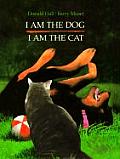
As a follow up to this lesson, I recommend that teachers share poet Donald Hall's wonderful picture book, I Am the Dog, I Am the Cat, with students. It models use of voice, as well as reinforcing the idea of opposites.


More opposites tomorrow, including a leather-wearing "Extreme" and his opposite, an educational-television obsessed "Boring."

Many thanks to the Northfield community, especially the third grade poets, for sharing their writing.

Tuesday, January 18, 2011

Emerging Poets Sampler

On Poetry Friday, I shared two student poems from my current school residency. Since the kids have been doing such great work on their poems, I've got more poetry to post.

This is my second year at Lisbon Elementary (home of the Lisbon Lions) in the western part of Howard County, Maryland. It's a welcoming school and I have a great time with the Lisbon fifth graders.

For a typical workshop, I begin with some kind of warm up. It might be a discussion of family food traditions, a zen drawing exercise, or a sensory experiment.

Next we'll read and discuss a model poem. I share some student poems from past residencies and then we're off... writing away!

Last week, one of our lessons was on Portrait Poems. The full Portrait Poem lesson description is here.

I can't remember which image or newspaper clipping Jessie B. used for her poem, but I love this one. The descriptions are deceptively simple, which makes the final lines WOW.

Three Women
by Jessie B.

Three women
fighting and
bickering
wondering
what to do
for the party
how to
plan it where
to have it
when to have
it very unaware
of the disastrous
tornado.

The fighting and bickering in the opening lines pair, in a very quiet way, with the tornado.

Phoebe F. chose a well-known image by Dorothea Lange (more of her Migrant Mother series here) . This portrait poem struck me as a reminder that our children see a connection between the Great Depression and the financial stresses many families are struggling with right now.


After Dorothea Lange
by Phoebe F.

Lines of stress, anger, hopelessness.
The lady, three kids scared
Their house foreclosed and
Nowhere to go, nothing to
Eat. The mother – brown hair
Worn clothes, scared, shocked.
Can’t get anywhere because
The lady sold her tires
To buy food.
She lives alone with her
3 kids but gets help and
Lives in a shelter.
She is scared for her kids
Bent over and crying.

There is a stark rhythm to the poem that fits the subject well. I especially like the last two lines, because we don't know whether the mother or the children are "bent over and crying." For me, that adds to the haunting tone.
Thanks again to the educators and families at Lisbon ES for giving me permission to share these wonderful student poems. And thanks to the Maryland State Arts Council for funding our Artist-in-Education grant.