THE LAST FIFTH GRADE OF EMERSON ELEMENTARY

THE LAST FIFTH GRADE OF EMERSON ELEMENTARY
April 12, 2016
Showing posts with label fiction craft talk. Show all posts

Wednesday, November 18, 2015

Craft Talk with Author Lee Gjertsen Malone

I have a confession to make. I am addicted to craft books.

Not the kind with knitting patterns, beading advice, or recipes for adorable cupcakes that look like space aliens (though I do have those).

I'm talking about books about the craft of writing.

These are just a few of my books
about the craft of writing.
Debut middle grade author Lee Gjertsen Malone is stopping by today to give us a pep talk. Sometimes the best advice for authors and NaNovelists is to stop worrying about how to write and just write. That's the moment when our characters, instead of our self-help books, guide us through a draft.

Let's welcome Lee Gjertsen Malone to Author Amok.

Lee Gjertsen Malone is the author of
THE LAST BOY AT ST. EDITH'S
debuting on February 23, 2016.
“I’m bored,” Francesca said, for what seemed like the tenth time today.


I was jogging along side the two of them, barely able to match their steps. “What’s going? I don’t understand any of this!” I squeaked out, struggling to keep up.


“This is all moving so fast,” Bartholomew whispered, his hands in her hair. “We just met yesterday.”


Many authors find themselves writing this kind of dialogue all the time in first drafts. But sometimes writers need to stop and listen to what our characters saying.


Not to each other – but to us.


I’m a firm believer that we all have a subconscious writer, a little muse (or nag, depending on your point of view) helping us as we grapple with the many facets of writing a novel – the characters, the plot, the voice. And sometimes that muse tells us things we need to hear through our own invented people. I was reminded of this recently while mentoring in this fall's Pitch Wars contest, and I think it’s worthwhile for many writers to consider.


Because let’s face it. If your character thinks the story is boring....or confusing...or moving too fast...what will your readers think?


Sometimes, it’s true, characters need to express certain emotions like frustration or confusion as part of the plot. This kind of dialogue can allow a more knowledgeable character explain what’s going on, or provide needed character depth. For example, a character who is easily frustrated by simple situations could be very compelling in the right story.


But all too often, these bits and pieces of dialogue are telling us what we don’t want to hear – that the romance is actually moving too fast. That our story has become confusing, or repetitive. Or, because the plot demands it, some of the characters are behaving in a way counter to their own personalities.


So looking at dialogue this way during the revision process can be a good method for finding some of the flaws in your work -- especially if you are the sort of writer who is reluctant to listen to critique partners who might be saying the same things.


I generally think reading dialogue out loud is a great way to see how it works for your story, and looking for these kinds of problems is another way you can improve both your dialogue and your plot. If you find can places where what your characters are saying feels more like a commentary on the story itself, then you have an opportunity to solve those problems and avoid some of the tropes that so often torpedo our work, like sagging middles, insta-romances, and plot points that get buried in blur of action.

So, what are your characters saying...to you?


Find out more about Lee's debut
novel on Goodreads.
Lee Gjertsen Malone is the author of the upcoming middle grade  novel THE LAST BOY AT ST. EDITH’S. As a journalist she’s written about everything from wedding planning to the banking crisis to how to build your own homemade camera satellite. Her interests include amateur cheesemaking, traveling, associating with animals, shushing people in movie theaters, kickboxing, and blinking very rapidly for no reason. She lives in Cambridge, Mass. with her husband, daughter, and a rotating cast of pets.

Thursday, December 12, 2013

5 Questions for Kelly Bingham (Part 1)

Writerly Friends, the holidays are a time of delicious treats. Last week it was my favorite cookie recipe. This week's Author Amok treat is not edible. But it will fill you up with writerly goodness.

Kelly Bingham is visiting today and tomorrow!


Kelly's website is here.
Kelly Bingham has been a storyboard artist, story supervisor, and director and is now a writer. Shark Girl, her first novel, was named a Best Book for Young Adults by the American Library Association. Its sequel is Formerly Shark Girl. Kelly is a graduate of the Vermont College of Fine Arts MFA program.

If you haven't read Kelly's Shark Girl novels -- which are YA and *in verse* -- make sure both books are on your "gifts to self" list. Because you have been so nice.

This year, Kelly ventured into picture books and oh my gosh, she knocked it out of the park with Z is for Moose. 

I heard about Z is for Moose at my local SCBWI conference last March. Illustrator Paul O. Zelinsky gave a talk about creating the art for Kelly's manuscript. This hilarious twist on ABC books charmed me, but I was also impressed with Zelinsky's attention to detail as he worked on the book. Even the page borders went through draft after draft until it was perfect.

Here's the book trailer, with Kelly and Paul.


I rushed to the conference book sales to buy a copy for every child under seven in my family, but everyone else had the same idea. Z is for Moose was sold out.

When I attended SCBWI Eastern PA's Critique Fest this fall, I was so excited to see Kelly's name on the faculty list. I loved her YA verse novel Shark Girl -- about a gifted teen artist who loses her arm in a shark attack -- for its depth of characterization. And then, I was lucky enough to earn a critique with Kelly.

Of course, I snagged this brilliant lady -- along with several copies of Z is for Moose -- immediately. And here she is! At Author Amok!

Please welcome author Kelly Bingham.


5 Questions for Kelly Bingham

Amok: I have heard that verse novels are a good fit for the teen voice. Why do you think that might be true? Was Shark Girl written in verse from the outset? If not, what prompted you to switch from prose to poetry as a way to tell Jane's story?

Bingham: I think poetry novels are a good fit for most people, teens or not. There is something inviting about the poetry novel form. You jump right in and off you go. There are not a lot of barriers between the reader and the main character, so you tend to step right into a main character's shoes, and action usually clips right along. Poetry novels also often deal with emotionally heavy subjects, and the brevity of each constructed scene can keep you from growing bored. Most people like that, I think. I have heard many people say, after reading a particularly good poetry novel, "I don't normally like poetry or poetry novels, but this one was good." I think they are responding to the intimate, unique form that poetry lends to storytelling.

Having said that, I never set out to write a poetry novel with Shark Girl. I was not familiar with the format except for having read Karen Hesse's Out of the Dust. I began writing Shark Girl as a prose novel.

But I struggled with it a long time. I could not get the story off the ground or find Jane's voice.

Then, while i was studying at Vermont College, we had a whole weekend devoted ot YA poetry novels. I read a lot, listened to a lot of lectures, and became intrigued. At that point, a friend said, "Why don't you try writing your book as a poetry novel?"

When he said that, something instantly clicked. At home, the words poured out onto the page and I began to find character and story.

Eventually, I had to slow down, back up, and actually learn HOW to write poetry, since I knew nothing about it. I spent a long time working with my instructors, studying and practicing poetry. I worried that I would not write my book as well as I wanted because I didn't have years and year of poetry writing under my belt.

My instructors were hugely helpful, and in time (nearly three years) I completed the book! And now I can't imagine Shark Girl in any other way but as a poetry novel!


Amok: Shark Girl has such a clear trajectory and timeline -- the  shark attack, then Jane's recovery.  How did you plan a narrative arc for the sequel, Formerly Shark Girl?

Bingham: That was a tough one, because there was no obvious, heavily emotion-driven event, like there was in the first book.

The entire reason I decided to write the sequel was because so many readers wrote to me, asking for one. The number one question everyone had was, "Does Jane choose nursing or art?" (In the first book, Jane ended her story by toying with both options [for college and career]).

So I set out to write the sequel with the goal of answering that question, along with the handful of other questions that popped up over and over in my notes from readers. 

"Does Jane go back to the ocean?"

"Does she swim again?"

"Does she ever see Max again?"

But how do you make that compelling? A 17-year-old girl trying to decide what to study in college doesn't naturally make for gripping reading. That's what I had the hardest time with: just getting started, figuring out how to make the story absorbing, interesting, and how to create suspense.


I don't know exactly how to describe how I figured out my dramatic arc. I will say there was a ton of trial and error. In the end, I decided the arc would work best if I had more than one storyline unraveling as the book progressed, that I needed to keep the focus simple and true -- not contrived and dramatically demanding -- and that if we cared enough about the honest, sincere way Jane approached the confusing milestones and decisions in her life, then we'd be engaged. I reminded myself I was writing this book for the readers who wrote to me. They cared about Jane. I would trust them to keep caring about her long enough to see how she struggled her way through the continuing challenges of moving forward after  her life-changing shark attack.

I decided that tension might be aided by continuously touching back and forth between the developing storylines, and leaving the resolution to all the storylines until the very end, having them all wrap up at the same time in their own, domino-effect way. I wanted the reader to keep guessing on everything right up til the end.

So I have a storyline where Jane is trying to decide what do do after she graduates, which path to follow. She explores both options by attending lots of medical classes, and also by taking extra art sessions after school, always pushing herself to learn and grow in each area.

I also have a storyline with Jane's first romance, a boy in school she has mixed feelings about. Then along comes a boy she has definite feelings for, but is he interest in her or just being nice?

Max is a totally hot swimmer with irresistible curls, kind of like a teenage
Ryan Lochte. But he has problems of his own.
I also put some time inter her relationship with Justin [a younger brother figure Jane met in Shark Girl, while both are rehabbing in the hospital], and have the two characters paint a long, involved mural in Justin's bedroom. Each time we check back in on that thread, the mural advances a little, and in each mural scene, something happens that deepens the relationship those two characters have.

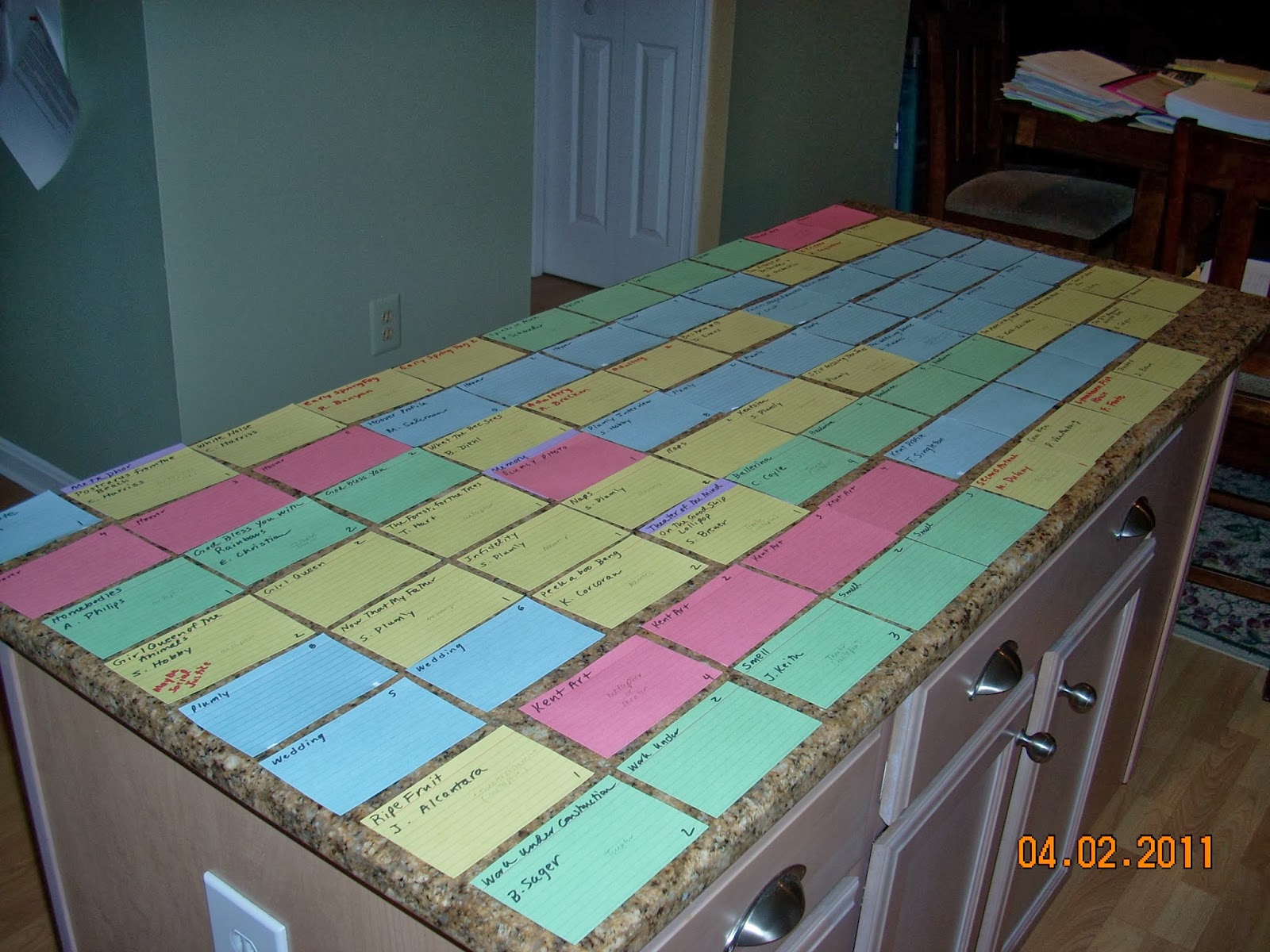
Once I got all those threads ironed out and rolling along, I spent time at my bulletin board, making sure that parts of the story didn't sag or balloon out of proportion or get short-changed. My "bulletin board" is a big board where I pin up a tiny summary of every scene I've drafted so far, in order. I have a ridiculously complicated system of color coding my tiny slips of paper so that they each match a particular storyline. So, at any given time, I can study my board and realize that the "blue" storyline (Jane and Justin's mural painting progress, for example) has too many scenes compared to everything else. Or maybe the "pink" storyline (the love story) has too few scenes, too much length between checkpoints, and those checkpoints need to be closer together.

When I'm in the final stages of drafting, I use my bulletin board as reference to hone tighter and tighter, until all the story threads have the amount of time needed to fully arc and resolve, and that all the threads are successfully woven together in a smooth way.

Would it be quicker to outline the story before I begin writing? Of course. But I am unable to work that way and, believe me, I've tried. I discover my story as I write. I never know the ending until I get that! The rewards are the fun in watching the story unfold before my eyes. The non-fun part is all the time and effort spent spinning my wheels on plotlines and characters that ultimately get cut. [Hmm. Sounds familiar. Reader, have you been following Author Amok's Kill Your Darlings series?]

So: A lot of thought. A lot of preliminary, loose note-taking, exploration, decision-making, months and months of drafting, and finally a crazy, messy, jumbled up bulletin board of colored paper that changes and changes and changes as I draft. That's how I do it.

Author Amok approves of Kelly's method.
Here is my "planning island" for an issue
of Little Patuxent Review.
If anyone comments on this interview, I'd love to hear how THEY do it. I'm always interested in hearing other author's processes!

Kelly, thank you so much for these insightful answers.

Writerly friends, Kelly will be back for Poetry Friday. We'll talk more about Shark Girl, discuss Z is for Moose, and get Kelly's advice for would-be picture book authors.

Thursday, November 21, 2013

There Are Places I Remember (Kill Your Darlings 6)

Hello, Writerly Friends. Happy Poetry Friday!

Did you read Writer's Almanac this week? Garrison Keillor attributed the phrase "murder your darlings" to British author Sir Arthur Quiller-Couch. I always suspected Quiller-Couch was a Death Eater.


Hogwarts Castle
A sketch of Hogwarts Castle from
the Harry Potter Lexicon. Since we can't
have the Poetry Friday Party in a fictional
castle, let's head over to Katya's place,
Write. Sketch. Repeat.
We've been talking about the revision process, how hard it is to cut characters--and even full plot-lines--from a novel-in-progress.

What about setting? Can you imagine the Harry Potter books without Hogwarts? Gone with the Wind without Tara? Peter Rabbit without Mr. McGregor's garden?


Poor Peter has lost his blue jacket.
This week, I'm giving setting the Kill Your Darlings treatment.

If you dream about a house, some say, you are visiting the mansion of your soul. It's easy to become connected to place, because places hit all of our senses. Not just the Big Five: sight, sound smell, taste, and touch. In a setting, we also have thermoception (sense of heat and cold) and equilibrioception (sense of balance, or how we perceive gravity in a place).

Read more about senses beyond the Big Five here. (P.S. This won't be new information for those of you in the Sensory Processing world.)

All these senses working together, filling my brain and body with input -- this is why I love to travel. And it's why I love to visit settings -- or use a setting I'm very familiar with -- when I'm working on a book.

Settings can, however, become literary darlings.

When I began working on my middle grade novel-in-verse, my eldest had just finished fifth grade. During that last year at elementary school, I chaperoned a field trip to Mount Vernon, George Washington's home in Northern Virginia.


Mount Vernon circa 1800.
One thing I remembered about that day: the Washington mansion was filled with tour guides, but there was no one available to answer students' questions at the slave quarters.


The quarters were a sharp contrast to the Washington
mansion, with its giant feather beds.
From Travelblog.org.
This became a plot point in my novel. I sent my fifth grade characters to Mount Vernon. Like me, they were frustrated that they couldn't learn more about the slaves who labored at the Washingtons' plantation.

In the novel, when my characters returned from Mount Vernon, they did some research and learned about the Underground Railroad Experience Trail. This is a real, docent-led hike through the woods of Sandy Spring, Maryland. Experts believe the Quaker families in the area were part of the Underground Railroad network.

Near the end of my book, Miss Hill's fifth grade class planned and took a field trip to the trail, so they could learn more about the history of slavery.

I took my friend Michelle, my kids, her kids, and some extra kids to the trail one spring morning. (The guided hike is free, but you have to make a reservation).
A conductor at the Underground Railroad Experience Trail.
What an excellent program! I let the docent know about my novel. I wrote the experience trail into my book. The poem is in the voice of Norah Hassan, an immigrant from Jerusalem. I thought it was the perfect fit between character, setting, and plot.


Freedom Seeker: The Underground Railroad Experience Trail
By Norah Hassan

On the trail, we had a conductor who helped us escape.
The whole class followed her through a forest
where signs said, To be sold and let Three Slaves.
She called us Freedom Seekers.

My family came here for a better life,
even though we were not slaves.
We did not take much.
One bag of things from home for each person.

On the trail, trackers hid, hunting for slaves.
The conductor said, “You’d rather chance
going in those woods than staying at the plantation.”
I know what it’s like to give up my bed, my neighborhood.

When the conductor said people escaped
to keep their families together, I thought of Jaddi.
He is old. My mother says once he goes home,
he will not leave Jerusalem and visit us again.

On the trail, we pretended to follow the North Star,
moss growing on trees like a compass.
I was behind Katie, hopping across the stream,
pretending to hide our scent from dogs, when she fell.

I have never seen an arm break.
I have never seen the whiteness of bone.

Ashlie said, “That’s disgusting.”
She stepped over Katie as if she were a muddy stone.
Jason, Rennie and I helped Katie to the stream bank.
T. J. called 9-1-1 on his cell phone then found Miss Hill.

I thought, Slaves did not have 9-1-1.
Jason raised his hand and asked the conductor,
“If we really were escaping slaves,
would we have to leave Katie behind?”

I know what it means to leave someone behind.

I have been a freedom seeker.

However, when I overhauled the plot of my novel this summer, I realized both Mount Vernon and the Underground Railroad Experience Trail had to go.

Can I tell you how hard it was to cut a WHOLE SETTING, especially a cool one that people should know about, and where I did a boat load of research and took pages of notes?! It felt like murder most foul, my friends.

Can you imagine Hamlet set anywhere else but Elsinore Castle?
(Said to be based on Kronborg Castle in Denmark.)

This was killing a darling in its truest sense, because including the experience trail in the book had become my personal agenda. The book had different ideas. We were only momentarily at odds with one another, but the needs of the book won. They always do.

I leave you with a cover of the Beatles "In My Life." Have you ever had to cut a setting you loved from a novel? Tell us about it!