THE LAST FIFTH GRADE OF EMERSON ELEMENTARY

THE LAST FIFTH GRADE OF EMERSON ELEMENTARY
April 12, 2016

Saturday, April 21, 2012

30 Habits of Highly Effective Poets #21: William Stafford on Being the Early Bard

I'm just a little obsessed with the poetry of William Stafford. When I learned that the great American poet rose daily around 4 AM to write, I decided to try it myself.

The first few days went great. My night-owl family did their best to understand that I'd be going to bed EARLY. But people needed help with homework and stuff. I started needing afternoon naps. The naps got longer. 4:00 AM became 4:45 AM. The snooze button was my frenemy. But on the days that I got up early, I did write.

I discovered that I am a morning person, not a true early bard. 

While Stafford's routine didn't work for me, there are many writers who are at their best in the pre-dawn hours. They like the quiet space of being the only awake person in the house. Stafford says, at this time of day, he felt available to "catch" the poems. There's a connection here with Betsy Franco's "Bed Head" post -- using the space between sleep and wakefulness, where the mind is still uncluttered and open to ideas.

In addition to William Stafford, Cynthia Lord (Rules) has told me that she is an early bard. Reportedly, so is novelist Manil Suri.


Over the years, I have been working on a series of poems -- each in response to a piece in Stafford's collection, The Darkness around Us Is Deep.

My early poem, "Driving Home from the Poetry Festival, 1996" was written long before I started the series. However, a friend pointed out that this poem resonates with Stafford's well-known "Traveling through the Dark."

Here are both poems:

Driving Home from the Poetry Festival, 1996
by Laura Shovan

I would like to remember this night,
compel my mind to hoard sounds, images.
But Route 80 is featureless,
dark and nothing more.
I wish for some apparition,
a fire in the sky, the carcass
of an animal strewn across the road,
its blood flashing in snapshots.
Tonight words reached behind my eyes
like sea water, into my throat like desert air.
This night should be remembered.

My mother, with me big in her belly,
drove some other featureless highway,
the rest of the world home in bed.
A voice said, "Pull over."
And she did. Even though she was alone,
she listened to that voice,
and watched from the shoulder.
A darkened car hurtled toward her and me.
Tonight I say, speak to me, Voice,
so I will remember.

But I am closer to home with every mile,
knowing this drive will be forgotten,
not even hearing the radio drone.
Words burn in my mind.
There is no room for road,
or darkness, or music.
A voice I recognize now, as my own,
has whispered, Mother, blood, belly.
Carcass, car, desert.
These words anchor themselves just
long enough for me to write them here.

First published in Paterson Literary Review.
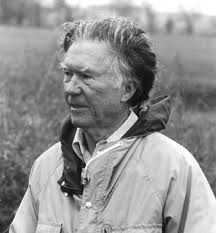
Traveling through the Dark
By William Stafford
Traveling through the dark I found a deer
dead on the edge of the Wilson River road.
It is usually best to roll them into the canyon:
that road is narrow; to swerve might make more dead.


By glow of the tail-light I stumbled back of the car   
and stood by the heap, a doe, a recent killing;   
she had stiffened already, almost cold.
I dragged her off; she was large in the belly.


My fingers touching her side brought me the reason—
her side was warm; her fawn lay there waiting,   
alive, still, never to be born. 
The rest of the poem can be read at The Poetry Foundation.

Friday, April 20, 2012

30 Habits of Highly Effective Poets #20: Tabatha Yeatts-Lonske on Seeing Patterns

Happy Poetry Friday! To celebrate National Poetry Month, poets have been visiting Author Amok to talk about their favorite writing habits -- the things that help them get the job done. You can find the full schedule of guest bloggers here.

Not only is today's guest blogger, Tabatha Yeatts-Lonske, a poet, but her entire post is poetic.

We all gather bric-a-brac, threads, driftwood and moss from our lives to write poems. However, it's the thread of smoke and the bright fire of ideas that follows which turn every day stuff into gather-round-worthy verse. In Tabatha's lovely metaphor, the fire of ideas is as grand as the stars. What matters is the pattern we see in the sky.
physics.unlv.edu
Here is Tabatha:
"His head is made of stars, but not yet arranged into constellations."
~
Elias Canetti

When we write, it can feel like that. Like we are trying to arrange our stars into constellations as best we can.

It takes a lot of imagination, making a constellation. Let’s say you’ve got a few stars and they're kind of close together. Some bright, some a bit pale. You watch them a while, maybe until you lose focus and can't see them any more. And suddenly, there’s a lion, a bear, a man in a chariot soaring across the sky. Just a few stars, but somehow they can make a whole story. A whole world.

Where do they come from, these visions? How can you take the words in your head and shape them into something you can share, something other people can see too?

Here's what helps me:

I need lots of creative fuel (great art, music, stories, ideas, conversations) and time to let ideas ripen. For me, words have to brew a while before a picture emerges.

(Photo by Michael McDonough http://www.flickr.com/photos/mikemcd/1572189529/

I need a chunk of uninterrupted time with few distractions. I like to write in the car. Waiting to pick up my kids is a great time for me to write (as long as I don’t turn on NPR). For convenience’s sake, I put together a binder that I can grab when I know there might be time to sit. The binder contains ideas I can use as starting places, contest and magazine deadlines that I’d like to keep in mind, and lined paper.

I need to be willing to write that first awful version, and then not give up on it. Move the pieces around and around until it turns into a recognizable picture.

I need editors, people who I can ask to read drafts and find weak spots. I am lucky to have several excellent readers that I can turn to for help.

Right now, my poetry group is having a poetry idea month, similar to Tara Lazar's Picture Book Idea Month. We are trying to come up with an idea a day to give us springboards for future poems. Ideas are so much easier than actual poems that it doesn't feel like a chore. It's fun and useful. The list will go in my binder when it’s done.
Everybody has their own ways to venture into their stars and create constellations. Be willing to play, to learn, to listen. Trust yourself.

Thanks, Tabatha. Beautiful advice. You can visit Tabatha at her blog, The Opposite of Indifference.

Today's Poetry Friday host is Diane Mayr of Random Noodling. (If you'd like to read Diane's contribution to "30 Habits of Highly Effective Poets," click here. 

And here is a poem, "The Constellations," by William Cullen Bryant.

The Constellations

O constellations of the early night,
That sparkled brighter as the twilight died,
And made the darkness glorious! I have seen
Your rays grow dim upon the horizon's edge,
And sink behind the mountains. I have seen
The great Orion, with his jewelled belt,
That large-limbed warrior of the skies, go down
Into the gloom. Beside him sank a crowd
Of shining ones. I look in vain to find
The group of sister-stars, which mothers love
To show their wondering babes, the gentle Seven.
Along the desert space mine eyes in vain
Seek the resplendent cressets which the Twins
Uplifted in their ever-youthful hands.
The streaming tresses of the Egyptian Queen
Spangle the heavens no more. The Virgin trails
No more her glittering garments through the blue.
Gone! all are gone! and the forsaken Night,
With all her winds, in all her dreary wastes,
Sighs that they shine upon her face no more.
No only here and there a little star
Looks forth alone. Ah me! I know them not,
Those dim successors of the numberless host
That filled the heavenly fields, and flung to earth
Their guivering fires. And now the middle watch
Betwixt the eve and morn is past, and still
The darkness gains upon the sky, and still
It closes round my way. Shall, then, the Night,
Grow starless in her later hours? Have these
No train of flaming watchers, that shall mark
Their coming and farewell? O Sons of Light!
Have ye then left me ere the dawn of day
To grope along my journey sad and faint?
Thus I complained, and from the darkness round
A voice replied--was it indeed a voice,
Or seeming accents of a waking dream
Heard by the inner ear? But thus it said:
O Traveller of the Night! thine eyes are dim
With watching; and the mists, that chill the vale
Down which thy feet are passing, hide from view
The ever-burning stars. It is thy sight
That is so dark, and not the heaens. Thine eyes,
Were they but clear, would see a fiery host
Above thee; Hercules, with flashing mace,
The Lyre with silver cords, the Swan uppoised
On gleaming wings, the Dolphin gliding on
With glistening scales, and that poetic steed,
With beamy mane, whose hoof struck out from earth
The fount of Hippocrene, and many more,
Fair clustered splendors, with whose rays the Night
Shall close her march in glory, ere she yield,
To the young Day, the great earth steeped in dew.
So spake the monitor, and I perceived
How vain were my repinings, and my thought
Went backward to the vanished years and all
The good and great who came and passed with them,
And knew that ever would the years to come
Bring with them, in their course, the good and great,
Lights of the world, though, to my clouded sight,
Their rays might seem but dim, or reach me not.


William Cullen Bryant


Thursday, April 19, 2012

30 Habits of Highly Effective Poets #19: Irene Latham on the 1:1 Ratio

Irene Latham is a fellow Poetry Friday blogger. You might call her writing habit the Golden Rule for writers: Read more than you write.

I read an interview with recent Pen/Malamud Award winner Edith Pearlman, who writes short fiction. She reports a ratio of 50:6 -- reading as many as 50 books but writing only about six stories each year.

Here's Irene: Read one book of poetry for every poem you write.
On my night table now, one book by a local poet...

and one nationally known poet. This book won a prize
from the press Irene mentions. (LS)

I first heard this piece of advice Colrain Poetry Manuscript Conference in 2010, from the lips of Jeffrey Levine, editor at Tupelo Press.

At the time, I was like, wow, really? It seemed impossible -- I mean, during those mad times (like National Poetry Month) when I'm writing a poem a day, that's like 60 poems a day. And, I thought, (add eye roll here) the advice just might be a bit self-serving, as it was coming from someone who would very much like for me to purchase books from his press.

And that's when I realized I had been really good about making middle grade fiction a priority on my reading list, but my tendency with poetry was to return again and again to the same favorite volumes.

So I decided to actually try it. I started off by ordering Tupelo Press's fantastic subscription series (nearly a book a month for just $99!), and then started making volumes of poetry for children a priority. Talk about win-win: I read these books, keep some, gift A LOT of them. New babies? Give them poetry. Kid birthday? Give them poetry. Friend birthday? Give them poetry.

And here's the best part: I really can tell a difference in my writing. I've been exposed to ideas and inspiration and forms I never would have thought of. It's really opened me up, and also helped to refine my poetic voice.

Try it! Even if you initially roll your eyes like I did, I bet you'll end up finding it a new and valuable part of your (not just writing) life.

Irene Latham is the award-winning author of two volumes of poetry THE COLOR OF LOST ROOMS and WHAT CAME BEFORE and two novels for children LEAVING GEE’S BEND and DON’T FEED THE BOY (coming October 16!)


Family legend has it that since she was four years old she’s been writing love poems – to her mother. To find out more about Irene, visit her at www.irenelatham.com.


Wednesday, April 18, 2012

30 Habits of Highly Effective Poets #18: Betsy Franco on "Bed Head"

Greetings, fellow morning people! How are those sparkly brains today?

I was working with the fifth graders at Swansfield Elementary yesterday. When I explain my preference for quiet during writing time, I have everyone point at the two sides of their heads. Most of the kids know their brains have two lobes. One side is logical -- your computer, but also your dictionary. The other side is creative -- your artist, your outside the box thinker. Writing poetry requires accessing both sides of the brain. If you talk to me while I'm writing, I feel like an electric cord that's been pulled out too fast -- zap!
Brain lobes from www.biausa.org
That's why I love children's poet Betsy Franco's writing habit: bed head. When your brain is waking up, there's a beautiful quiet space for thinking and for poetry.

Here's Betsy:

I'm a morning person, so I used to jump out of bed and write. But I discovered that there's a very creative space between waking up and getting out of bed. If I have any problems to solve in my novels, poetry, or plays, I just lie there, and the solutions come. Characters talk to me about things I've had them do or say, lines of poetry come to me that solve rhythm issues I'm having, and so on. I definitely have a pen and a thick pad of paper on my nightstand.  And I've learned to write in the dark.  Turning on the light breaks the spell.

For instance, I'm working on a novel that's written in both prose and poetry.  I added a party scene in which the main character scans the room and spots some people he recognizes from school.  I didn't think his ex-girlfriend was there, because she's not into partying, but I woke up and could picture her leaning on her boyfriend's arm. She was pretending to be comfortable, but I could tell from her eyes that the whole scene looked like a circus to her.  And my main character picked up on that, too.

I also worked out many of my concrete poems in A Curious Collection of Cats and A Dazzling Display of Dogs in that weird, creative morning space.  It was easier to picture the visual part of the poem and how it meshed with the words.  Here's a poem from the cat collection that came to me in the morning.


copyright 2009 Betsy Franco, A Curious Collection of Cats, Tricycle Press

Try it.  If you're a morning person, keep your eyes shut, concentrate on something you're writing, and see what happens.

Thank you for visiting, Betsy. A Curious Collection of Cats is one of my favorite books to use when I work on concrete poems with kids. Check out my lesson using Betsy's poetry from the book.

Does Betsy's advice remind you of Winnie-the-Pooh's "Thotful Spot?" Enjoy your time a-bed.

Tuesday, April 17, 2012

30 Habits of Highly Effective Poets #17: Charles Waters on a Training Regimen

Children's poet Charles Waters and I have a lot in common. We are both from a small New Jersey town in the shadow of New York City -- Teaneck.

We also both believe in the importance of regular writing time. Two hours a day, no matter what. For me, it's 8 to 10 AM, as soon as my kids have left for school. That's when my brain is freshest. It's no surprise that Charles compares this routine to training as an athlete. Writing every day is like boot camp for your poems. The more often you drill, the stronger your work becomes.

Here's Charles:

Well I go about things in a pretty regimented way. Try to get at least two hours in a day. Maybe more, never less. Like an athlete, you need to practice to develop the skills or else you're weakening yourself. 

I also read children's poetry every single day. Anthologies especially rock! Get a taste of all the children's poets, living or not.
You'll find Charles' work in this anthology.
One of the most interesting things I find about writing is that after the two hours are up and you finish whatever the day’s work was, just play around for fun!  I’ve gotten some solid children’s poems out of that. The pump is already primed -- so see what else you have up your sleeve.  Most of what I come up with afterward are short children’s poems; tight, right and to the point.

Good writing is being at your most courageous. As I’ve said before, believe in yourself because your Uncle Charles believes in you! 

SIBLING RIVALRY
We can’t seem to get along
One’s too weak and one’s too strong,
We don’t know who is which –
It always seems to switch.

SURPRISE BIRTHDAY PARTY
Grandma Betty
Showers me
With multi-colored
Gossamer streams
That looks like
   Paper spaghetti …

CONFETTI!
Now I'm in the mood for cake!

THIS BUCKET
This bucket needs a hand
To fill it up with sand
Or if you flip it over
You’ve got a one man band.

© Charles Waters 2012 all rights reserved.

Charles Waters poems have appeared in THE ARROW FINDS ITS MARK: FOUND POEMS edited by Georgia Heard  and will appear in the upcoming anthologies AMAZING PLACES edited by Lee Bennett Hopkins, NATIONAL GEOGRAPHIC BOOK OF ANIMAL POETRY edited by J. Patrick Lewis (Children’s Poet Laureate of the United States), and AND THE CROWD GOES WILD: A GLOBAL GATHERING OF SPORTS POEMS edited by Carol-Ann Hoyte and Heidi Bee Roemer.

He performs his one man show POETRY TIME WITH UNCLE CHARLES to elementary and middle school audiences.

Please check out his website at www.charleswaters.net

Thanks for the reminder to be courageous, Charles. It's especially important in our poems for children. Kids connect with poems that describe the experience of childhood in an authentic way. It comforts them to know, even when I am a grown-up, I'm going to remember how it felt to be me -- a kid -- right now!

It's Tuesday, so let's do a writing prompt. Working from Charles' simile that poets are a kind of athlete, write about a word workout.

In this poem, think about: 
  • What are you lifting instead of weights? Maybe you could start by pressing a short line and work your way up to a line (can you see the barbell?) that's longer, heavier.
Olympic weightlifter Liana Lambert (Australia).
  • What are you doing to get the heart pumping?
  • How about the abs? Some crunchy onomatopoeia words will get that six-pack of syllables into shape.
  • What music do you listen to during your word workout?

Monday, April 16, 2012

30 Habits of Highly Effective Poets #16: Michael Tims on the Scientific Method

Michael Tims is a Maryland-based poet, active in the wonderful Hyattstown Mill Arts project. You can find the project's blog here, where Michael's "30 Habits" contribution is also posted.

My husband says if I hadn't become a poet, I would  have been a biologist. Insects, in particular, have my heart because they are so fascinating. (My children still remember me as the only mom, during the 17-year-cicada invasion, running to -- not away from -- the bugs.)

Lately, I have been reading molecular biologist Katherine Larson, who makes use of her scientific background in her poems.

Michael reading at a local writers' conference.
Here is Michael, on making scientific knowledge a poetic habit:

There’s a Science Geek Inside – You Just Don’t See It

Recently I started using science articles to generate the substructure or scaffolding of poems. Much like ekphrasis, which uses visual art as a jump off point, science reporting offers both unique phenomena and vocabulary to plumb.

A series of recent articles about atmospheric activity, everything from Earth’s magnetic field, to what occurs when lightning forms, to the microbial presence on water droplets provided me a unique point of view to consider my relationship with Gaia.

Generally, I lack awareness of atmospheric activity, unless the weather compels me to pay attention. These ideas gave me the context for my own existence in the larger scheme of Earth cycles and allowed my subconscious the space to work its magic under the surface. Like any good story, I wondered how it was going to turn out, until it did.

A Theory of Air
by Michael Tims
Gaia’s magnetic field snaps back
displeased at being rubbed
the wrong way.
An aurora borealis pungent
and teeming spills over
the invisible edge
we are all creatures of air.

Hurricane speed tide plumes plunge
ice crystals down to the surface
as electrostatic discharge
organized in previously unexplored
directions, seeding nimbus dust
slurries of reproducing
bacteria on troposphere mist.

Our cellular progenitors, we carry
their helical imprint of sky, engulf
each other in symbiont desperation
a reverse sublimation to terrestrial
bodies of water, Gaia
intending our existence to be
a lighter resurfacing
less of the organized, arrogant
tissue we now drag through air.

Michael Tims received his BA in English/Writing from George Mason University and a PhD from the University of Maryland studying the chemical ecologically of medicinal plants. He has worked in the herbal supplement industry as a health food store owner, a clinical herbalist and an academic researcher/teacher. He created and writes a science blog, Bardo's Calculus, as well as an artist and writers blog, Hyattstown Millstone 

 During my poetry residencies this month, I'll be sharing John Scieszka's book Science Verse with fifth graders at Swansfield ES. Each piece in the book is a song or famous poem parody that explores something scientific (e.g. "Food Chain" a reenvisioning of "I'll Be Working on the Railroad.")

Third graders at Northfield E.S. will be writing science-based Fibonacci poems with me, using the beautiful book Growing Patterns: Fibonacci Numbers in Nature by Sarah C. Campbell. I can't wait to see what the crossover between science and poetry inspires in my students.