.tif) Writerly Friends, I am counting the hours until April 1. National Poetry Month begins tomorrow. All month, we will be talking about "Source Poems," pieces of writing that we carry with us, or that shift or thinking in a significant way.
Writerly Friends, I am counting the hours until April 1. National Poetry Month begins tomorrow. All month, we will be talking about "Source Poems," pieces of writing that we carry with us, or that shift or thinking in a significant way.
I can think of no better lead-in to our month of guest bloggers on this topic than a conversation with Margarita Engle.
Margarita is an award-winning author of twelve books for children. Many of these are works of historical fiction, written in verse. Margarita's great source is the history of the Caribbean Island and Central America. Her website is: www.margaritaengle.com
Last week saw the publication of Margarita's latest middle grade novel, Silver People. Silver People covers ten years in the Serpent Cut, where laborers from around the Caribbean and Americas constructed the Panama Canal.
I knew little about this period in U. S. and Pan-American history. Silver People has significantly shifted my thinking about the Panama Canal, which celebrates its centennial this August.
Five Questions for Margarita Engle
Author Amok: How did
you conduct your research, finding such pockets in the story of the Panama
Canal as the ocean voyage that brought job-seeking islanders to the work site
and the use of child labor? (Mateo, your protagonist, is a fourteen-year-old
Cuban--too young to work--but the man in charge “believes” Mateo’s lie that he
is Spanish and 20.)
Margarita Engle: It was
really difficult to narrow the characters down to just a few, because research
revealed such a vast wealth of information, and unlike so many other historical
topics, even a vast wealth of first person diaries, interviews, and
memoirs. I wanted to speak in the voices
of several countries, so I chose the Cuban voice of Mateo, because Cuba is so familiar
to me. Since Jamaica was one of the
largest groups of laborers, and it’s so close to Cuba, I included Henry. I was fascinated by the image of Mateo and
Henry never meeting until they leave their own islands. The local girl [Anita] and the Puerto Rican naturalist
[Augusto] are voices that I could hear very easily, but when I tried to add a
Spanish anarchist, it got too complex.
Portraying the politics of Europe was just too much. I had to leave some aspects of this enormous
story for other authors to tell. I hope
that the Canal’s 2014 centennial will stimulate an interest in various stories
told from unique points of view. I can’t
wait to read something written by a Panamanian, a Jamaican, a Barbadian, a
Spaniard…
 |
Thousands of lives were lost during the canal's construction.
Silver People describes a mudslide that buries the laborers alive.
Source: Fine Art America |
Amok: Racism and
segregation are a big part of the Panama Canal’s story. There is a scene in a
hospital when a newly arrived American welfare worker says:
As soon as Americans arrive in Panama
Even northerners begin to act
Like southerners
I take
that to mean racial segregation was an accepted way of life at the work site. In
fact, the title Silver People refers
to dark-skinned workers being paid in silver, while light-skinned Europeans and
Americans were paid in gold. Would you speak about some of the racial and
economic disparities you write about it your book? How were you able to
communicate this struggle through your characters?
Engle: So many
of the American engineers, steam shovel drivers, and their families had never
been to the tropics. They were stunned
by the heat, mud, malaria, and yellow fever.
Hearing unfamiliar languages, and seeing so many people from so many
countries, many of them wrote diaries and letters that were blatantly
racist. Maybe they would have been the
same way at home, if there had been a racially mixed population in Iowa or
Kansas. Tragically, the U.S. government’s official policies made racism seem
acceptable. The Silver-Gold payroll
system was sheer, undisguised apartheid.
The one shocking image that was most vivid to me was not housing or
payday, but lunchtime. Americans ate in
comfortable dining tents with tablecloths.
Spaniards sat on the railroad tracks.
Jamaicans had to stand up. I read
an excerpt from an African-American preacher’s diary. He said the segregation he’d seen in Panama
was far more extreme than Jim Crow in the southern U.S.
Amok: Early on
in the book, Mateo talks about missing Cuba and the home he was so eager to
leave. I thought this was a nice moment of self-awareness. As a children’s
author, how do you show a young character’s increasing self-awareness over the
course of a novel? Does using a historical event as your setting make writing
Mateo’s coming-of-age story (we see him grow from fourteen to twenty-four in Silver People) easier or more difficult?
Engle: It was
extremely difficult to age a character that much in the space of just a couple
of hundred pages of free verse, but that’s how long the height of the U.S.
canal-digging effort lasted. I wanted
him to witness the start, and the end.
Amok: Silver People has an ensemble cast. In addition to
Mateo, we meet several historical figures, as well as Mateo’s friends: Anita, a
local orphan who is raised by an island woman and is her apprentice herbalist;
Henry, a Jamaican who is angry about the injustices workers are experiencing;
Augusto, the visiting naturalist who takes Mateo as his apprentice. Several
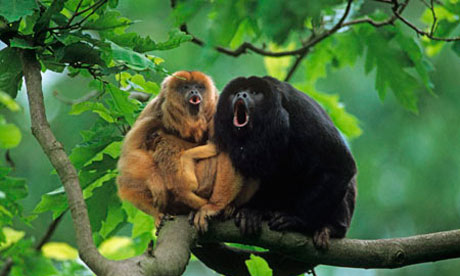
times, the book steps away from its human cast. We hear poems in the voices of
howler monkeys, poison dark frogs, even Panama’s trees. What made you decide to
include the voices of the forest in your book?
Engle: I wanted
this book to be my personal love letter to tropical rain forests. The Panama Canal was the first engineering
project of its size, the first to destroy an immense tract of wilderness. I wanted to see it from many points of view,
including the forest itself, and all the creatures that depend on trees. Perhaps this occurred to me partly because I
was trained as a scientist, and I’ve always loved to explore. Some of my plant collecting trips, when I
still worked as a botanist and agronomist, were in central America, where I
encountered descendants of silver people who were kind to me. [from Wikipedia: “Agronomy is the science and technology of producing and using
plants for food, fuel, fiber, and land reclamation. Agronomy encompasses work
in the areas of plant genetics, plant physiology, meteorology, and soil science.”]
They lived
in remote jungles, completely dependent on local resources. All over the world, rain forests are now
being destroyed at a frightening rate. I
hope young people who read Silver People
will want to become protectors of the plants and animals who speak to them from
those pages.
Amok: The Panama
Canal is considered, by some, to be the eighth wonder of the world. Yet tens of
thousands of lives were lost in the effort and—as we have seen—working
conditions for most were deplorable. Why do you think this is an important
story to share with young readers? How did you balance the darkness of the
canal’s history with a sense of hope for Mateo and his friends?
Engle: I’m
surprised that so many adults who go on luxury cruises through the Panama Canal
have no concept of the history. They’ve
seen the famous photo of Teddy Roosevelt posed on a steam shovel, wearing a
“Panama” hat that was actually made in Ecuador, but they don’t know that most
of the real work was done by Caribbean islanders with shovels. Neither do the teenagers who order all sorts
of “stuff” online, never realizing that before being “shipped overnight,” all
that stuff had to be moved slowly, on a container ship from Asia, through the
Panama Canal. Globalization began in
1914, not with the invention of the Internet.
August, 2014 is the centennial. I
hope the laborers whose contribution was not acknowledged during the 1915
Panama Pacific Exposition, will finally be honored now, through this
story. I know that sounds like an
enormous goal for one book, but it was an enormous historical event.
I loved how you made this big story personal in the form of Mateo, his growing relationship with Anita, and how he finds a hodge-podge family in Henry and Augusto. By the end of the novel, we've seen Mateo survive the physical and emotional horrors of digging the canal. He has matured into an intelligent, caring young man who shares his love of the natural world with Anita, his new bride.
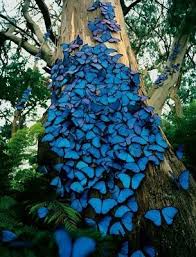 |
| Migration of Blue Morpho butterflies. |
 |
Thanks for sharing your
books with us, Margarita! |
Margarita Engle is the Cuban-American author of The Surrender Tree, which received the
first Newbery Honor ever awarded to a Latino/a.
Her young adult verse novels have also received multiple Pura Belpré
Awards and Honors, as well as three Américas Awards, the Claudia Lewis Poetry
Award, a Lee Bennett Hopkins Honor, and the Jane Addams Peace Award, among
others.
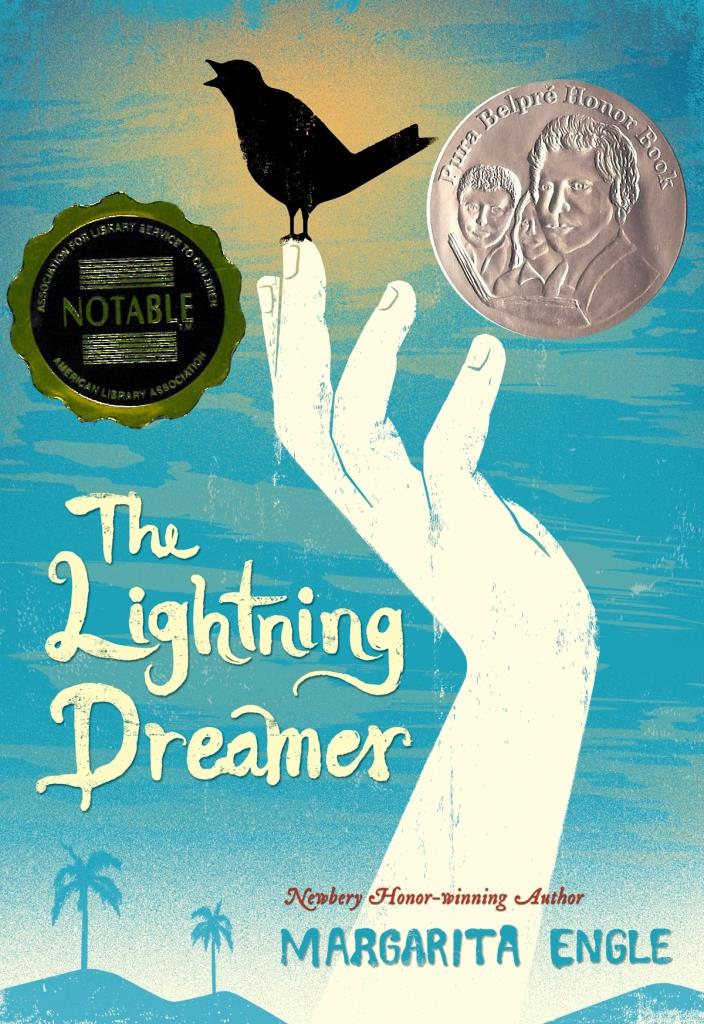
Margarita’s newest verse novel is Silver People, Voices From the Panama Canal.
Books for younger children include Mountain Dog, Summer Birds, When You Wander, and Tiny Rabbit’s Big Wish.
Margarita lives in central California, where she enjoys
hiding in the forest to help train her husband’s wilderness search and rescue
dogs. www.margaritaengle.com