THE LAST FIFTH GRADE OF EMERSON ELEMENTARY

THE LAST FIFTH GRADE OF EMERSON ELEMENTARY
April 12, 2016
Showing posts with label betsy franco. Show all posts

Saturday, April 21, 2012

30 Habits of Highly Effective Poets #21: William Stafford on Being the Early Bard

I'm just a little obsessed with the poetry of William Stafford. When I learned that the great American poet rose daily around 4 AM to write, I decided to try it myself.

The first few days went great. My night-owl family did their best to understand that I'd be going to bed EARLY. But people needed help with homework and stuff. I started needing afternoon naps. The naps got longer. 4:00 AM became 4:45 AM. The snooze button was my frenemy. But on the days that I got up early, I did write.

I discovered that I am a morning person, not a true early bard. 

While Stafford's routine didn't work for me, there are many writers who are at their best in the pre-dawn hours. They like the quiet space of being the only awake person in the house. Stafford says, at this time of day, he felt available to "catch" the poems. There's a connection here with Betsy Franco's "Bed Head" post -- using the space between sleep and wakefulness, where the mind is still uncluttered and open to ideas.

In addition to William Stafford, Cynthia Lord (Rules) has told me that she is an early bard. Reportedly, so is novelist Manil Suri.


Over the years, I have been working on a series of poems -- each in response to a piece in Stafford's collection, The Darkness around Us Is Deep.

My early poem, "Driving Home from the Poetry Festival, 1996" was written long before I started the series. However, a friend pointed out that this poem resonates with Stafford's well-known "Traveling through the Dark."

Here are both poems:

Driving Home from the Poetry Festival, 1996
by Laura Shovan

I would like to remember this night,
compel my mind to hoard sounds, images.
But Route 80 is featureless,
dark and nothing more.
I wish for some apparition,
a fire in the sky, the carcass
of an animal strewn across the road,
its blood flashing in snapshots.
Tonight words reached behind my eyes
like sea water, into my throat like desert air.
This night should be remembered.

My mother, with me big in her belly,
drove some other featureless highway,
the rest of the world home in bed.
A voice said, "Pull over."
And she did. Even though she was alone,
she listened to that voice,
and watched from the shoulder.
A darkened car hurtled toward her and me.
Tonight I say, speak to me, Voice,
so I will remember.

But I am closer to home with every mile,
knowing this drive will be forgotten,
not even hearing the radio drone.
Words burn in my mind.
There is no room for road,
or darkness, or music.
A voice I recognize now, as my own,
has whispered, Mother, blood, belly.
Carcass, car, desert.
These words anchor themselves just
long enough for me to write them here.

First published in Paterson Literary Review.
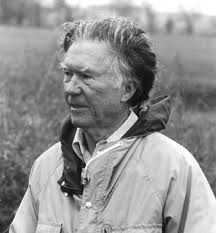
Traveling through the Dark
By William Stafford
Traveling through the dark I found a deer
dead on the edge of the Wilson River road.
It is usually best to roll them into the canyon:
that road is narrow; to swerve might make more dead.


By glow of the tail-light I stumbled back of the car   
and stood by the heap, a doe, a recent killing;   
she had stiffened already, almost cold.
I dragged her off; she was large in the belly.


My fingers touching her side brought me the reason—
her side was warm; her fawn lay there waiting,   
alive, still, never to be born. 
The rest of the poem can be read at The Poetry Foundation.

Wednesday, April 18, 2012

30 Habits of Highly Effective Poets #18: Betsy Franco on "Bed Head"

Greetings, fellow morning people! How are those sparkly brains today?

I was working with the fifth graders at Swansfield Elementary yesterday. When I explain my preference for quiet during writing time, I have everyone point at the two sides of their heads. Most of the kids know their brains have two lobes. One side is logical -- your computer, but also your dictionary. The other side is creative -- your artist, your outside the box thinker. Writing poetry requires accessing both sides of the brain. If you talk to me while I'm writing, I feel like an electric cord that's been pulled out too fast -- zap!
Brain lobes from www.biausa.org
That's why I love children's poet Betsy Franco's writing habit: bed head. When your brain is waking up, there's a beautiful quiet space for thinking and for poetry.

Here's Betsy:

I'm a morning person, so I used to jump out of bed and write. But I discovered that there's a very creative space between waking up and getting out of bed. If I have any problems to solve in my novels, poetry, or plays, I just lie there, and the solutions come. Characters talk to me about things I've had them do or say, lines of poetry come to me that solve rhythm issues I'm having, and so on. I definitely have a pen and a thick pad of paper on my nightstand.  And I've learned to write in the dark.  Turning on the light breaks the spell.

For instance, I'm working on a novel that's written in both prose and poetry.  I added a party scene in which the main character scans the room and spots some people he recognizes from school.  I didn't think his ex-girlfriend was there, because she's not into partying, but I woke up and could picture her leaning on her boyfriend's arm. She was pretending to be comfortable, but I could tell from her eyes that the whole scene looked like a circus to her.  And my main character picked up on that, too.

I also worked out many of my concrete poems in A Curious Collection of Cats and A Dazzling Display of Dogs in that weird, creative morning space.  It was easier to picture the visual part of the poem and how it meshed with the words.  Here's a poem from the cat collection that came to me in the morning.


copyright 2009 Betsy Franco, A Curious Collection of Cats, Tricycle Press

Try it.  If you're a morning person, keep your eyes shut, concentrate on something you're writing, and see what happens.

Thank you for visiting, Betsy. A Curious Collection of Cats is one of my favorite books to use when I work on concrete poems with kids. Check out my lesson using Betsy's poetry from the book.

Does Betsy's advice remind you of Winnie-the-Pooh's "Thotful Spot?" Enjoy your time a-bed.

Friday, November 5, 2010

Concrete Poetry Friday

This Poetry Friday, I am making Poetry Pops with third graders at Fort Garrison Elementary in the Baltimore suburbs.

It's the beginning of the year, and these are emerging writers. The teachers and I work together to create poetry workshops that have a heavy dose of fun.

I hope you have a chance to try this concrete poetry lesson -- which teaches simile, creative thinking, and form -- with your students.

Materials
crayons, heavy white paper cut in large (4-5" diameter) circles, large popsicle sticks, swirly lollipop(s) (optional), sample craft.

I bought my lollipops online from Lollies Galore.

Ahead of time:
Make enough "pops" for each student. I used two of the paper circles and hot-glued the popsicle stick between layers to form the lollipops.

Lesson

1)  Define concrete poetry together.

2)  Read and look at concrete poems from Betsy Franco's A Curious Collection of Cats.

Two of my favorite poems from the book are "Rascal's Tongue" . . .


Rascal's Tongue

by Betsy Franco

If you've
ever attempted to lick your neck clean,
I think you'll understand what I mean
When I say my cat's tongue is especially long.
Go ahead. Lick your neck. Prove me wrong!

and "Limerick on a Leash."


Ask students what they think the shape of the poems add to the words.

They'll probably notice that you have to move your head and neck to read, "Rascal's Tongue," just as the cat in the picture is doing. Did you have to twist the book to follow Miss Boo's twisted leash?


Betsy Franco owns all rights to these poems. Thanks to Betsy for giving me permission to post these pages from her book today. 

3)  Show students the sample craft.

If you have real lollipop -- oh, joy! -- let students examine them using all 5 senses. What colors do they see? What do they think those colors taste like?

4)  Discuss similes.

If students haven't encountered similes before, we usually talk about looking for shapes in the clouds. That's making similes!

5)  Writing challenge: For each color, think of a simile that isn't a food.

Writing Steps
  • Write down a simile for each color on the pop.
  • Using crayons, write your poem in swirls on your Poetry Pop (match color to the color you are describing).
  • Color the back of your pop, or create another poem for the second side.
Here is the Poetry Pop poem I wrote:

Poetry Pop

By Laura Shovan


Red like a cardinal looping through the sunny blue sky.
Yellow as a daffodil's curly edges in a colorful garden.
Blue as waves crashing over a rainbow surfboard.
Green like the  fat blades of grass I use to whistle.
Orange as a tabby cat's curved tail.
White as swirls of frost on my winter window.

and the finished Poetry Pops look like this:


(P.S. They make great fans on a hot day.)

Our Poetry Friday host is the gang at Teaching Authors. Stop by for more tasty poetry posts.