THE LAST FIFTH GRADE OF EMERSON ELEMENTARY

THE LAST FIFTH GRADE OF EMERSON ELEMENTARY
April 12, 2016
Showing posts with label poetry craft. Show all posts

Thursday, June 5, 2014

Poetry Friday: In Residence

Happy Poetry Friday!

Today is my last post from the "In Residence" series, which highlighted lessons and poems from the Northfield Elementary third graders.

Students' poems were on display
at our open house last week.
You can find the other "In Residence" posts here:


And you'll find all of this week's Poetry Friday posts at Carol's Corner.

When we last left our poets, they were working on pocket poems. Using a model poem by Calef Brown as their jumping off point, the third graders stretched their imaginations, putting magical objects, invented creatures, and other cool stuff in their poetry pockets.

Here are some poems and photos from our poetry open house.

Reading pocket poems.
Pocket Poem
by Alina M.

I have a jacket,
a jacket made of pockets.
In pocket #13
I have a b each.
It is a private beach.
The water is clear.
The sun is bright yellow.
The sand is tan.
You can see the fish swimming
and the dolphins jumping up,
but here comes a shark. Ouch!
I pull it out when I'm having a bad day,
then relax and have lots of fun.
I invite my friends Paige, Taylor, Melissa,
Hannah and Alike.
We get splashed with the water
and ride on the dolphin far away.
Where do you think I go?


Pocket Poem
by Jackson R.

I have a jacket,
a jacket made of pockets.
Pocket number 1 holds X-ray sunglasses.
My X-ray sunglasses have black liner
and when I look down and I can see
valuable items.
I would use it to find life's mysterious things
that went missing.
I want it because I could find life's

greatest mysteries.
The bad thing is someone might find my
X-ray sunglasses and steal them.
But the best thing I ever found was
the Amber Room.
What will you find next?


Pocket Poem
by Lily B.

I have a jacket,
a jacket made of pockets.
In pocket #2 I have a Pegasus.
It is lime green with different colored
hibiscus on it.

When she flies by unbloomed flowers
they bloom right away. In the winter
I would use her to grow flowers.
When she senses unbloomed flowers
she kicks me but the kick doesn't hurt.
What she eats any kind of flower.
I love having her in my pocket.

When it was time to say goodbye until next spring, the third grade teachers and I exchanged gifts.

For me -- thank you poems in the shape of beautiful stars!


For the Fibonacci-happy third grade -- a copy of Poetry Friday guy Greg Pincus's debut novel!

Check it out here!
Have a great summer, all of you teachers and school librarians out there. See you next school year.

Thursday, November 21, 2013

There Are Places I Remember (Kill Your Darlings 6)

Hello, Writerly Friends. Happy Poetry Friday!

Did you read Writer's Almanac this week? Garrison Keillor attributed the phrase "murder your darlings" to British author Sir Arthur Quiller-Couch. I always suspected Quiller-Couch was a Death Eater.


Hogwarts Castle
A sketch of Hogwarts Castle from
the Harry Potter Lexicon. Since we can't
have the Poetry Friday Party in a fictional
castle, let's head over to Katya's place,
Write. Sketch. Repeat.
We've been talking about the revision process, how hard it is to cut characters--and even full plot-lines--from a novel-in-progress.

What about setting? Can you imagine the Harry Potter books without Hogwarts? Gone with the Wind without Tara? Peter Rabbit without Mr. McGregor's garden?
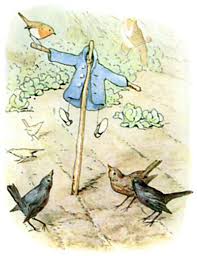

Poor Peter has lost his blue jacket.
This week, I'm giving setting the Kill Your Darlings treatment.

If you dream about a house, some say, you are visiting the mansion of your soul. It's easy to become connected to place, because places hit all of our senses. Not just the Big Five: sight, sound smell, taste, and touch. In a setting, we also have thermoception (sense of heat and cold) and equilibrioception (sense of balance, or how we perceive gravity in a place).

Read more about senses beyond the Big Five here. (P.S. This won't be new information for those of you in the Sensory Processing world.)

All these senses working together, filling my brain and body with input -- this is why I love to travel. And it's why I love to visit settings -- or use a setting I'm very familiar with -- when I'm working on a book.

Settings can, however, become literary darlings.

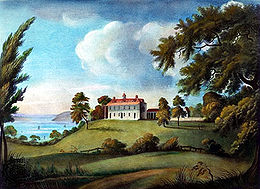
When I began working on my middle grade novel-in-verse, my eldest had just finished fifth grade. During that last year at elementary school, I chaperoned a field trip to Mount Vernon, George Washington's home in Northern Virginia.


Mount Vernon circa 1800.
One thing I remembered about that day: the Washington mansion was filled with tour guides, but there was no one available to answer students' questions at the slave quarters.


The quarters were a sharp contrast to the Washington
mansion, with its giant feather beds.
From Travelblog.org.
This became a plot point in my novel. I sent my fifth grade characters to Mount Vernon. Like me, they were frustrated that they couldn't learn more about the slaves who labored at the Washingtons' plantation.

In the novel, when my characters returned from Mount Vernon, they did some research and learned about the Underground Railroad Experience Trail. This is a real, docent-led hike through the woods of Sandy Spring, Maryland. Experts believe the Quaker families in the area were part of the Underground Railroad network.

Near the end of my book, Miss Hill's fifth grade class planned and took a field trip to the trail, so they could learn more about the history of slavery.

I took my friend Michelle, my kids, her kids, and some extra kids to the trail one spring morning. (The guided hike is free, but you have to make a reservation).
A conductor at the Underground Railroad Experience Trail.
What an excellent program! I let the docent know about my novel. I wrote the experience trail into my book. The poem is in the voice of Norah Hassan, an immigrant from Jerusalem. I thought it was the perfect fit between character, setting, and plot.


Freedom Seeker: The Underground Railroad Experience Trail
By Norah Hassan

On the trail, we had a conductor who helped us escape.
The whole class followed her through a forest
where signs said, To be sold and let Three Slaves.
She called us Freedom Seekers.

My family came here for a better life,
even though we were not slaves.
We did not take much.
One bag of things from home for each person.

On the trail, trackers hid, hunting for slaves.
The conductor said, “You’d rather chance
going in those woods than staying at the plantation.”
I know what it’s like to give up my bed, my neighborhood.

When the conductor said people escaped
to keep their families together, I thought of Jaddi.
He is old. My mother says once he goes home,
he will not leave Jerusalem and visit us again.

On the trail, we pretended to follow the North Star,
moss growing on trees like a compass.
I was behind Katie, hopping across the stream,
pretending to hide our scent from dogs, when she fell.

I have never seen an arm break.
I have never seen the whiteness of bone.

Ashlie said, “That’s disgusting.”
She stepped over Katie as if she were a muddy stone.
Jason, Rennie and I helped Katie to the stream bank.
T. J. called 9-1-1 on his cell phone then found Miss Hill.

I thought, Slaves did not have 9-1-1.
Jason raised his hand and asked the conductor,
“If we really were escaping slaves,
would we have to leave Katie behind?”

I know what it means to leave someone behind.

I have been a freedom seeker.

However, when I overhauled the plot of my novel this summer, I realized both Mount Vernon and the Underground Railroad Experience Trail had to go.

Can I tell you how hard it was to cut a WHOLE SETTING, especially a cool one that people should know about, and where I did a boat load of research and took pages of notes?! It felt like murder most foul, my friends.

Can you imagine Hamlet set anywhere else but Elsinore Castle?
(Said to be based on Kronborg Castle in Denmark.)

This was killing a darling in its truest sense, because including the experience trail in the book had become my personal agenda. The book had different ideas. We were only momentarily at odds with one another, but the needs of the book won. They always do.

I leave you with a cover of the Beatles "In My Life." Have you ever had to cut a setting you loved from a novel? Tell us about it!
Tuesday, February 5, 2013

Poetry Postcard 22

It's time for a happy dance, because we are halfway through the 44 Postcard poetry project.

Yesterday, author Charles Rammelkamp visited to talk about the postcard tradition he shares with his twin brother.

Today, I've got postcard and poem #22. If you've been following the project, you know that I hit a creative wall with the last five or six poems.

A lot of the most recent poems were light verse. Some were clever. Some were ridiculous. I wasn't totally satisfied with them, but I  had gotten them done and moved ahead.

That ended with postcard #22. It is a painting, "Memories of the Bitter Past," by Betty LaDuke. 

UPDATE: Betty LaDuke was kind enough to give me permission to post her painting!

Memories of the Bitter Past, Betty LaDuke,
posted with permission of the artist.
The card came to me as part of the 30 Contemporary Women Artists book published by Pomegranate.

Attempt 1:


I had an idea, triggered by the word "bitter." What if the heart functioned like a tongue, with different tastes or sections devoted to the emotional flavors: sweet, sour, salty (tears), bitter? The poem was coming as a direct address:

My love, what if
the heart was like a tongue
its quadrants mapped
each with its own
proclivities...

This (white paper) is from my bedside notebook.

Attempt 2:


I came downstairs, grabbed a yellow pad, got a little rhyme action going.

In school I learned
how tastes divide
the tongue, a continent
of countries, sour
sweet. The quadrants
of the heart need
such a map, I want
to know each chamber
and its beat.

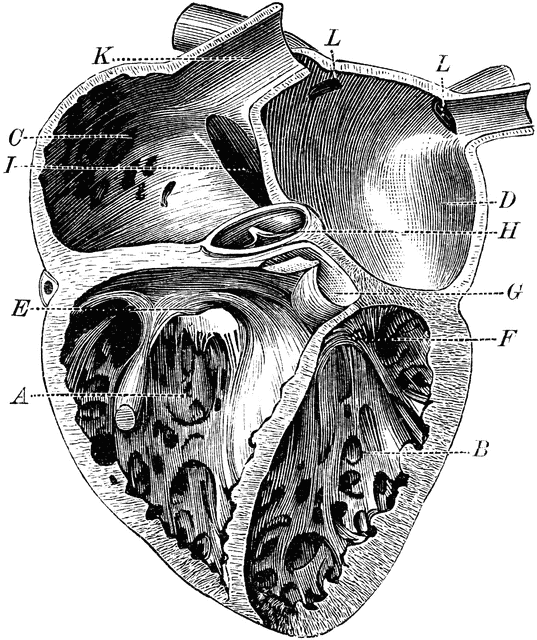
It's obvious from all the crossing out that I could not sustain this line of thinking/rhyme/rhythm. I tried doing some research about the structure of the heart.

Draft 3 with teeny diagram of
the blood flowing through the heart.
And, as you can see from the second "stanza" (actually a reboot), I suddenly realized that what I had on my hands was a wannabe sonnet.

In school, I learned how tastes divide the tongue,
a continent of flavors, sour and sweet.
The content of the heart need such a map.
I want to know each chamber and its beat.

Hooray! I know where the poem is heading. Now, I can get to work.

Attempt 3:
Sonnet is not working. I try short lines again.
Or not. I will spare you the: complaining to my husband, tearing out of hair, stomping around the kitchen, eating crunchy things very loudly.

I decided to start over. I opened The Essential Rumi and read a few poems. I began again.

Attempt 4 (Revised):

Every Flavor
After Rumi

A bitterness for what is past
travels through two chambers of the heart
and then your lungs.

You unlock the door, expecting the heart
to shrink like a mealy apple
when it learns who is visiting.

Dishes for every taste are served at this inn,
every flavor: salty, sweet, sour and bitter.
Your ventricle welcomes each guest,

sweeps him back out again,
saying, “Come again, come again” or
“That one won’t be back.”

Your atrium is the hearth
blazing and crumbling,
blazing and crumbling.

If it were always embers
or always a roaring fire,
the memory-guests would stay

they would talk all night,
drinking and eating delicacies,
you would be consumed.

by Laura Shovan

Postcard Information:
30 Contemporary Women Artists
Betty LaDuke (American, b. 1933)
Memories of the Bitter Past, 1979. Acrylic, 68 x 54 in.

© 1979 Betty LaDuke

Pomegranate ● Box 808022 ● Petaluma, CA 94975

This is the second time I've written a poem mimicking Rumi's style. The first is "The Parable of the Piano Bench," which will appear in this spring's edition of Seminary Ridge Review.

I hesitate to call this a breakthrough poem, but I do feel as thought I worked past that creative block. Magical realism sometimes appears in my poems. I'm still learning how to listen -- how to entertain and develop a wild idea when one walks through the wall.
Chambers of the Heart

Monday, January 28, 2013

Poetry Postcard 18

It was a busy poetry weekend. The latest issue of Little Patuxent Review went on sale Saturday, launched with a fabulous contributors' reading. I love these events. As editor, I get to stay behind the scenes and cheer on all of the readers.
The Winter 2013 issue, Doubt, features
a Renaissance masterpiece on the cover
.

This issue is tight (apologies for the slang). And it includes a piece Poetry Friday by blogger Irene Latham. You can purchase a copy at the LPR website.

Sunday, it was my turn to read. About seven of us were featured at Baltimore's Watermark Gallery, there was prose and poetry. Thanks to Eric Goodman, Manzar (who owns the gallery) and co-host Nitin Jagdish (fellow NYU grad -- go Violets!) for putting together such a great variety of readers.
My love of purple teams goes back
to my NYU days. (Go Ravens!)
Although I'd printed poems for the reading -- two from my book, several postcard poems -- Manzar mentioned the poet Rumi in her art-talk. I had a postcard poem "after Rumi" sitting in my Dropbox folder. Which meant it was on my phone. I've never read from my phone before. I leave that to younger, hipper folks like the Word Pimp. But it went pretty well.

The postcard poems were well received. It's great to get so much positive feedback on the project.

Today, I have an antique tourist postcard:


I have never been to Germany, so I had to do a little research. The Drosselhof is a wine tavern on the Drosselstrasse, a street well-known to tourists for its music and taverns. You can pay a virtual visit to the Drosselhof, which has a website.

Still, I didn't have enough to go on. Until I learned that one translation for Drosselstrasse is "Thrush Lane."

I'd had an encounter with a little bird, maybe a thrush, in the early fall. At the time, it seemed too ordinary an experience to write about. Birds often crashed into my grandmother's glass breezeway when I was a child. Some survived, some didn't.
http://commons.wikimedia.org/wiki/File:Song_Thrush_on_Flickr.jpg
I don't know why the postcard made this bird-story work as a poem. Perhaps what is working is the habit of writing a poem nearly every day. Or not  feeling like I have to knock one out of the ballpark every time I sit down to write.

As you will see, it's apropos to post this poem after such a busy weekend. 

Thrush Lane


That thump
on our glass door –
a thrush. It let me
scoop it whole
into my palm,
stroke its
dappled breast,
make it calm.
I spoke to it
of taverns
crowding
the Drosselgasse
with song.
The thrush replied,
Tut-tut,
oh-lay oh-lee,
chortling
to the quiet
afternoon.
by Laura Shovan

Postcard Information:
Rüdesheim – Drosselhof
Reproduction und Druck: Wödicke & Gemberg, Berlin
Verlag C. A. Stachelscheid – Düseeldorf, Pressehaus – Bestell-Nr. 010

I sent this card and poem to Poetry Friday blogger, Susan Taylor Brown. Susan is a bird-lover and photographer, so she's talented all around. Several weeks ago, Susan sent me two original photo-postcards of birds for the project. I thought she'd enjoy "Thrush Lane."

I have used a bird-call website for a couple of poems now. It's a cool site for bird enthusiasts. You can find it at Birdjam.com.


We had another bird encounter this fall. My husband, Rob, discovered a little bird, maybe a wren, stuck in our bathroom fan. 
Can you see the bird's tail on the left?
The bird was so wedged in the fan blades, we were sure it was dead. But my handy husband removed the fan from the ceiling and the little thing was alive, just very squished. 


Almost free!
We had to break the fan to get the bird loose, expecting its wing to be broken. But the bird flew for the evergreens the moment we popped the fan apart. Now I know what it means to make a beeline for something.

Tabatha (The Opposite of Indifference) and I were supposed to meet for lunch today, but Mother Nature had other plans. Still, I know Tabatha is thinking of me. She's featuring music-themed postcards at her blog today, including a band of creepy clowns.

Friday, December 14, 2012

Poetry Friday: Poetry Postcard 3


It’s Cartoon Mayhem at Author Amok today.

I am making progress on the poetry postcard birthday project, which you may read about here.

My third attempt was in response to this cartoonish antique postcard.

Card by Seminole Souvenirs.

It caught my eye because I have family living in Florida. More importantly, I cannot resist goofiness. And this “Florida State Bird” is pretty goofy. I love his intense gaze, his needle-nose, menacing mouth, stained glass wings and those hairy antennae – nasty.

Before I get to the poem, though, I myself have been cartoonified this week. I have to say, it feels pretty awesome.

Baltimore poet David Eberhardt has put together a reading of “Renegade Poets” on January 6. It doesn’t take much to bring out the feminist in me, so she will be in full-force for this reading, which happens at the famed Minas Gallery. It’s in Baltimore’s Hampden neighborhood, favorite haunt of filmmaker John Waters and site of the annual Hon Fest.


The artwork by Christopher Morawski strikes that perfect balance between edgy and fun. My good friend, the most excellent poet Kathleen Hellen is reading. Slangston Hughes is a fabulous spoken word artist. Alan Barysh is a new poet for me, so I'm looking forward to hearing him read.

I hope my postcard poem strikes a balance, too. No one was  more surprised than I when a certain classical Greek hero strode into the poem and (ain't it just like a hero?) nearly wrestled it away from the poor mosquito.

The Mosquito

Its formal name is ancient Greek.
Imagine Odysseus plagued
by outsized Cyclops
and the song of honey-throated Sirens.
In his long years wandering,
maybe the hero came across
a trial so small, so commonplace,
as Aedes vexans. Vexed as he was
by Scylla’s hunger and Charybdis’ thirst,
Odysseus found mosquitoes
merely unpleasant and tussled
with exciting monsters first.

Laura Shovan


A note on the poem’s construction:

When it comes to prompts -- rather than those "hit on the head by the Muse" moments of inspiration -- I usually have to find a way into a poem. (See this post about on-ramps in writing.)

What's working for me is examining each post card carefully, writing down every phrase and word I find on the front and back. That word bank is my starting point.

When I looked up “Aedes Vexans” I found out that Aedes is Ancient Greek for distasteful, unpleasant. Since I’d already made notes on the postcard artist’s monstrous portrayal of the bug, I now had a monster and Ancient Greece. It was natural for Odysseus to make a cameo. Heck, he nearly took over the poem.
The marble head of Odysseus. That mosquito
bite looks like it's really bugging him.
http://ancienthistory.about.com/od/troyilium/tp/TrojanWarFAQs.htm
My twelve-year-old daughter is a huge fan of Greek mythology, thanks in part to the Percy Jackson and Harry Potter books. This poem scored her approval. Yes!

May your Poetry Friday have no shortage of fun surprises. Our host this week is Her Deliciousness Jama Rattigan. If we’re lucky, she may have some leftover latkes today.

If you would like a poetry postcard for my birthday, please send your address to laura@laurashovan.com.