THE LAST FIFTH GRADE OF EMERSON ELEMENTARY

THE LAST FIFTH GRADE OF EMERSON ELEMENTARY
April 12, 2016
Showing posts with label swift things are beautiful. Show all posts

Monday, May 13, 2013

I See the Stars at Night: A Lesson in Opposites


How do we get our bearings in a poem? Is the action set in the day or night? Is the emotion happy or sad? Are the people or animals in the poem working or resting?

One way to organize our thoughts in a poem−and to help readers find their way−is to use stanzas.

At Northfield, the third graders know that stanzas in a poem operate much like paragraphs in regular writing.

“Stanza” is the Italian word for “room.” (Read about the word's origins here.) 

I ask students to imagine that I am welcoming them into my house. We talk about what they would see in the front hall, the kitchen, even the bathroom (that gets a few giggles). 


So why would poetry borrow that word stanza? Because, one of the students will share, reading a poem with several stanzas is like walking into the different rooms of a house.

Since the third graders know we are doing opposites poems today, they quickly figure out exactly how many stanzas our poems will have.

Next, we brainstorm pairs of opposites on the blackboard. Some favorite topics for this poem are: delicious and disgusting, summer and winter, home and school, old and young, real and imaginary animals, night and day, hot and cold, busy and lazy, fast and slow.

Fast and slow is the topic of the model poem I use on opposites day. The poem and the guts of this lesson were shared with me by poet-in-the-schools Rosanne Singer. She was my mentor poet.

(Artists coming into the MD State Arts Council school residency program student teach. We accompany an artist on one residency, observing first and picking up classes throughout the week.)

Swift Things Are Beautiful

Swift things are beautiful:
Swallows and deer,
And lightning that falls
Bright-veined and clear,
Rivers and meteors,
Wind in the wheat,
The strong-withered horse,
The runner’s sure feet.

And slow things are beautiful:
The closing of day,
The pause of the wave
That curves downward to spray,
The ember that crumbles,
The opening flower,
And the ox that moves on
In the quiet of power.

by Elizabeth Coatsworth, author of The Cat Who Went to Heaven, 1931 Newbery winner.

The Cat Who Went to Heaven
At Goodreads.

Students love to pick out their favorite lines in this poem. We look at our hands and say, “Veins really do look like lightning!”

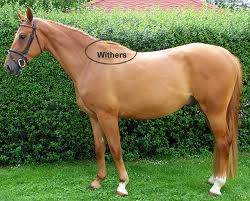
We pat ourselves on the back between the shoulders because that’s where our withers would be if we were horses.

One year, I had a class that was particularly taken with the line "The closing of day." I brought their teacher the Jane Kenyon poem "Let Evening Come" so they might further explore the idea of light and shadows settling at dusk.

Embers often need some explanation, but enough children have been camping or have fireplaces at home that they recognize the glowing coals, once they are described.


Someone always brings up the wonderful last two lines.

Because our culture equates power with speed, the slow, powerful ox creates a great discussion. The students often bring up other slow, powerful animals: tortoises that live over 100 years, elephants. This year, one boy mentioned that glaciers are slow and powerful. I'd never thought of that before. The class added the concept of slow, powerful water, using the Grand Canyon as an example of a gradual but powerful change to a landscape.

Thanks again to the Northfield community for giving me permission to share the third graders' wonderful poems.

I love the way Emma uses description in her poem so that we can guess which animals she's talking about even though she doesn't name them.

Emma B.

It Is OK to Be Big

It is OK to be big
If you have a long trunk,
Or a long body to keep you swimming,
Maybe a long neck to reach high,
A big body to keep babies safe.
It is okay to be big!

It is okay to be small
If you have a shell to keep you safe,
Or a small squeak for your mom,
Maybe you can hide really well.
If you fly very high you are safe.
It is OK to be small!

"A big body to keep babies safe." From Kangroos.Org
Evan's poem reminds me of "Let Evening Come." He shows the busyness of day, contrasted with the slowing down, peaceful feeling of night.

Evan M.

Day is so fun:
Go outside and run,
Go play rugby in the grass,
Go to the park with friends,
Put up a lemonade stand,
Hear the birds chirp,
Go inside at the end of the day.

I see the stars at night:
After a long day
In the sun, after a day
With my friends,
Go inside and eat
Dinner with my family,
And then go to bed, read a good book
Then say goodnight
To the world in your bed. 


I loved the conclusion of Andrew's poem. The inside fun stanza includes things my family enjoys doing together.

Andrew P.

Outside, Inside

Playing outside is fun:
Like climbing the stairs
Of the tree house,
Spinning in circles
On the tire swing,
And climbing to the
Tippy top of
The trees.

Inside is fun also:
Rolling the dice in
Board games like Sorry,
Dancing around in
Charades,
And watching a movie on
Family movie night.

I hope your Mother's Day was both fun and peaceful, everyone. I'll post more third grade opposites poems tomorrow.

Free printable vintage Mother's Day Cards!

Friday, May 11, 2012

Teaching Stanzas Part 2

Happy Poetry Friday!

I've been working on opposites poems with the Northfield third graders. Earlier, we did some warm ups and learned about stanzas (see the post here). Today, let's walk through the model poem.

First, we take a quick look at the poems. Since we're working on opposites, and opposites come in pairs, the third graders are expecting two parts, or stanzas.

Swift Things Are Beautiful
Swift things are beautiful:
Swallows and deer,
And lightning that falls
Bright-veined and clear,
Rivers and meteors, (5)
Wind in the wheat,
The strong-withered horse,
The runner's sure feet.
And slow things are beautiful:
The closing of day, (10)
The pause of the wave
That curves downward to spray,
The ember that crumbles,
The opening flower,
And the ox that moves on (15)
In the quiet of power.
When I was studying how to teach, our Methods professor encouraged us to write a list of  "hoped-for answers" to prepare for a poem discussion.

I ask the children to volunteer favorite lines, things that sound good to their ears, or part that feel confusing. Usually, they cover my "hoped-for answers" list and add new ideas.

Line 2: Children do find this line beautiful, thought not all know what a swallow is. I share that the bird is known for being an acrobatic flier. (And they frequent a nearby park.)

Lines 3-4: This section always comes up! I ask the students to look at the back of their hands or inside of their wrists. If we look at the veins there, we can see how they are shaped like lightning. What an amazing comparison the author is making.

Line 6: We talk about the idea that wind is invisible, it is the effect of wind moving that we can see. The wind can transform a field of grass into an undulating ocean.

Line 7: I  had to look up "withered" myself. Here, I have everyone give him or herself a pat on the back. The spot that we're patting, between the shoulder blades, would be our withers if we were horses.
horse-pros.com
Line 8: The idea is that "sure feet" communicates the smooth motion of an experienced runner. This line doesn't always come up, in which case I skip it.

Line 9: Later, I'll encourage the poets to use Coatsworth's strategy here. While this is not a refrain, the opening lines of each stanza are similar and introduce the topic.

Line 10: It's a thrill to have a nine-year-old boy or girl describe why s/he loves this line. This year, one of the boys described the image of the shifting shadows as the sun goes down. I sometimes offer Jane Kenyon's poem "Let Evening Come" as an extension for this line.

Line 11-12: For years, I've been talking with children about a crashing wave and how it pauses for a second or two as it crests. This year, Ms. Grim offered a new interpretation -- the tunnel of a wave that surfers ride.

Line 13: Often, we need to define ember. Most children are familiar with campfires or fireplace fires, so we can talk about the beautiful, glowing coals and how they slowly crumble to ash as the fire goes out.

Lines 15-16: We spend the most time on these two lines. I remind the students that a poet often puts the most important idea near the end of the poem, because it's the thought the reader is left with. We define "ox" if needed. I ask them what they think about the idea of something slow being powerful. Our culture usually equates power with speed -- race cars, rocket ships, the cheetah. Can a slow thing be powerful?

Before we read the poem one more time (to hear it as a whole after discussing its parts), I ask the children if they can find the overall theme. Yes, we are talking about fast and slow, but it is fast and slow things in nature that the poem focuses on. They get it!

This sounds like a lot when I write it up. But the children are so quick -- we usually cover all of these ideas in a fifteen minute discussion.

Before we move on to writing our own opposites poems, I'll usually read a few student samples from past years. Those who like to brainstorm can use a simple T-chart for this poem, listing three or more examples for each opposite.

Thanks again to Northfield's staff and families for sharing today's poems!

chewinggumfacts.com
Treats
by Colin E.

Sweet things are very tasty!
Like bubble gum popping in my  mouth
And Popsicles melting on my hand and falling on the floor.
And caramel melting in my mouth and tasting oh, so sweet.


And sour things are tasty too!
Like Sweet Tarts that make me pucker just like sour lemonade.
And Sour Patch Kids that me me twitch
  and make me beg for more.
At last the Green Apples, which my brother really hates
but they just make me feel so happy and let me smile with glee.

This next student poem is challenging because of the subject matter. However, it ends on a note of hope that I find beautiful. (I had asked the student to think of something he might contrast with the tanks in stanza one.)

War & Peace

Wars are bad...
fighting with other people
people dying and families crying
long black and bloody days of war
tanks are destroying after
destroying other things

Peace is good...
non-fighting with other people
people that are free and nobody's dying
no black and bloody days with other people
hang-gliders are peacefully flying

Summer and Winter
by Emily H.

Summer is fun:
You swim at the pool
Slap a volleyball at the beach
Surfing on a bright green wave
My aunt Michelle's boathouse is so fun
While we wolf down ice cream before it melts

Winter is fun, too:
Having snowball fights
We're bundled up with hats and gloves
Sledding over crisp and clear snow
The snow angels are beautiful
Christmas brings us presents
While we sip warm hot chocolate
After we eat the cold snow.

Randy's poem tells a story.

Land & Water
by Randy S.

Let's take a splash.
Manatees swim freely through the waters of Crystal River.
Dolphins make a splash into the ocean blue.
Octopi bounce around in the Marina.
Look a jellyfish. Ouch, it stung me!
Hopefully that crab doesn't get influenced.
I should probably scream 'cause here comes a shark.

We're back on land.
Now I'm back on land, blue sky overhead.
Green grass swaying in the wind.
I have to get back home to tend to my cockapoo.
Squirrels flying through the trees as I walk up the driveway.
Boo-boo comes flying to the door.
I'm glad to be home.

Today's Poetry Friday post is wonderful Irene Latham -- stop by for more poetry links.